Tag Archive | parenting

How to talk to kids about the Syrian refugee crisis

Although the crisis in Syria has been building for a long time, it is the poignant and tragic photographs of children and families suffering and dying while fleeing from the danger in their home country that have finally brought the issue to the forefront of our public consciousness.

Images that some people find distasteful and others argue the world needs to see have scrolled across our computer screens and stared out of our newspaper boxes, presented without warning to adults and children alike: The photographs of tiny Alan Kurdi, drowned along with his mother and older brother, washed up on the shore of a Turkish beach resort, his limp body tenderly cradled in the arms of a Turkish soldier; the combined despair and relief etched on the face of a father cradling his children as he finally reaches shore in a slowly deflating boat; the shocking footage of a TV cameraperson deliberately tripping a refugee father and child as they flee, and the confusion and anger on the father’s face as he stares up her, wondering why.

Continue reading

Talking to Kids About Sex – Part 1: Babies and Toddlers

Private Parts are Private, not Secret.

1. Use proper anatomical terminology for body parts: Penis, testes, vulva, vagina (Quick anatomy lesson: “Vulva” refers to whole area commonly referred to as a girl’s “private parts.” “Vagina” refers to the specific opening within the vulva. Of the two, “vulva” is generally the more useful and appropriate, unless you’re talking about where babies come from.) Using the proper words from the very beginning will allow you to become comfortable using them and hearing them.

Talking to babies and toddlers about sex: Private Parts are Private, not Secret, and My body, My choice starts in infancy. from www.picklesINK.com

Talking to Kids about Sex part 1: babies and toddlers

Continue reading

The sky is (not actually) falling! Highlights of the 2015 Ontario Sex Ed Curriculum

Today is the day!! The revised 2015 Ontario Health And Physical Education Curriculum (including, of greatest interest to most people, sexual education) has finally been released. Hooray!!! This means that at long last we can actually put aside our speculations and take ACTUAL FACTS AND QUOTATIONS woefully out of context!!

The sky is [not] falling! A comprehensive precis of the 2015 Ontario Health and Physical Education Curriculum - Elementary 2015 Ontario Elementary schools sexual education curriculum; #summary

The sky is [not] falling! A comprehensive precis of the 2015 Ontario Health and Physical Education Curriculum – Elementary

Just kidding! We’re all going to act like grown-ups here and assess the facts objectively before jumping to any conclusions. And to help out with that, I’ve taken some time this morning to go over the new curriculum with a fine-tooth comb and provide you with a summary.

Continue reading

I would NEVER say, “I would never.”

“I would NEVER…”

Of all the phrases I wish we parents…heck, people in general…would stop using, this one tops the list.

Back in the day, when I worked for Children’s Aid, I heard this from clients all the time: “You don’t get it because you don’t have kids. You haven’t been in my shoes. You can’t possibly understand. How can you tell me what to do?” SO annoying, amiright?”

I would nod sympathetically and patiently explain yet again that I completely understood their misgivings, but although I might not have children of my own, I had a lot of experience and training, not to mention a university degree in child development and specialized training in child welfare and assessment.

If I had a time machine, I would go back and apologize to all those clients and give the smug little university grad I was a smack upside the head because I Just. Didn’t. Get. It.

Continue reading

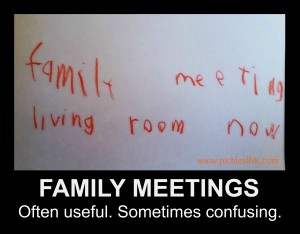
Minutes of the Pickles Family Meeting Regarding…well, I’m not exactly sure.

Pickles Family Meeting

January 26, 2015

Agenda

1.0 Money and math

2.0 Other business

Regular family meetings are a very useful parenting strategy, but sometimes when your child takes the reins they can get a little...confusing. www.picklesINK.com

Family meetings: Often useful. Sometimes confusing.

Minutes

Kid1 called the meeting to order at 7:01 pm.

Kid1 asked Kid2 to put her dolls away. Kid2 declined with extreme prejudice.

Continue reading

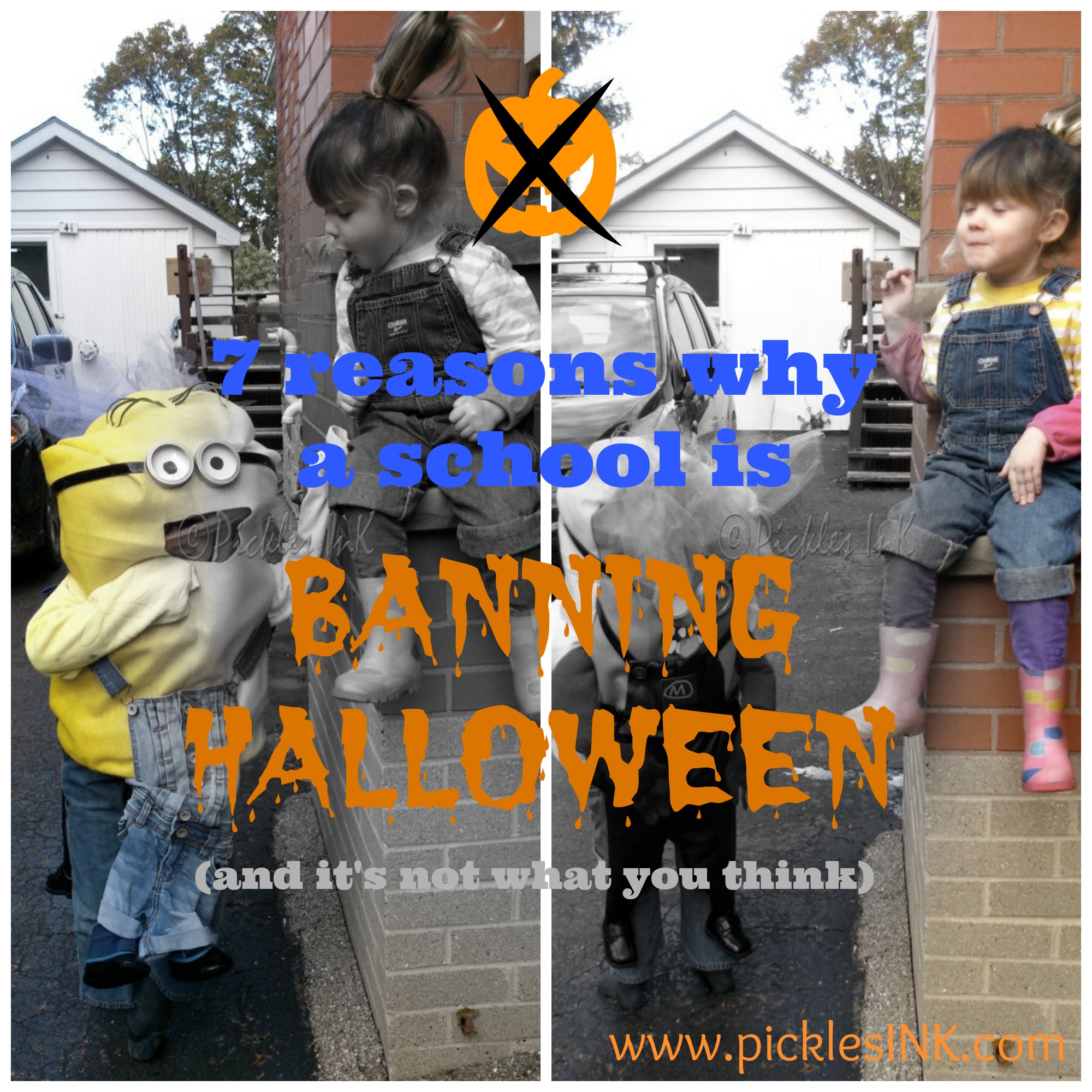
7 Reasons Why This School is Banning Halloween

Here’s one for the “What is the world coming to?” files.

7 reasons why a school is banning Halloween (and it's not what you think)

This gem scrolled through my Facebook feed yesterday: A friend’s children’s school has decided to forgo Halloween this year in favour of…I don’t know…Friday, I guess. The decision was attributed to the “staff” and the reasons behind it were given as follows: Continue reading

Who’s really sexualizing our daughters, anyway?

The fabulous Stephanie Giese of Binkies and Briefcases wrote a viral post about her disbelief at the sizing and coverage in Target’s clothing options for young girls. She had been noticing what seemed to be a distinct reluctance to include…y’know…fabric…in items like shorts for girls as young as 5. Her post received a mostly positive response, but also a fair bit of backlash (One standout was a commenter who posited that she should put her “fat-ass kid” on a diet if she wanted clothes to fit her better. Way to keep it classy, interweb.).

Quite impressively, Target reacted almost immediately, reaching out to her, doing their own research, and promising an overhaul of their sizing practices including feedback from “real” moms like her, which is awesome – we should be able to find clothing for our children that fit with our own tastes and values without having to pull out our sewing machines and make or modify them ourselves.

But…(you know me…there’s got to be a but)…I don’t agree with the reasoning that we need more modest clothing options to avoid sexualizing our young daughters. Children are not sexual. Exposed skin is not sexual. Children with exposed skin are not sexual.

Children are children. Continue reading

Stranger Danger

We had a child luring attempt in our small town recently, which is of course terrifying. I haven’t done much talking to Kids 1 and 2 so far about stranger danger, for a number of reasons.

Kid1 has a tendency to be very anxious. Last year one of his school friends told him about “strangers” and he went into an anxiety tailspin for days. Often once he starts thinking about something scary he’ll continue to worry about it no matter how remote or even completely impossible the threat is:

Kid1: “I looked at that picture in my bug book and now I’m afraid of scorpions.”

Me: “There are no scorpions in Canada.”

Kid1: “I know. But I’m still scared that one will sting me.”

Me: “But there aren’t any in Canada. You can’t be stung by one.”

Kid1: “I know. But what if I was? They are extremely venomous.”

Me: “There is absolutely no way that you could be stung by a scorpion.”

Kid1: “I know. But I’m still scared. What if I was?”

Me: “Well, you could pretend to be a giant bird that eats scorpions.”

Kid1: “Okay!       …Wait, now I’m scared of the giant bird.”

Me: *headdesk*

Statistics show that “stranger danger” is blown way out of proportion. The best and most recent estimate found that 25 children of the 46,718 reported missing in 2011 were listed as “abducted by stranger” — but “stranger” was defined as anyone who was not a parent, including relatives, family friends, or babysitters as well as the eponymous “stranger.” A 2003 study by the RCMP’s National Missing Children Services studied the 90 stranger abduction missing child reports entered into the national police database in 2000 and 2001 and found that only 2 of those children had been abducted by someone other than a relative or a close family friend.

Finally, up until last summer Kid1 wouldn’t have been anywhere unsupervised where a “stranger” could approach him anyway.

But my little baby boy is growing older, moving outside of my helicopter mommy bubble, spending time playing outside with friends, and even getting ready to walk to the bus stop by himself next year (all of which feels completely, utterly ridiculous to me before I remember that at his age I was walking 4 blocks to the corner store by myself).

So with this incident happening only blocks from our house, The Conversation became a necessity – obviously because the same person could still be in the neighbourhood, but also because I anticipated it being discussed at school (by both the teachers and the other kids), and I wanted Kid1 to hear it from me first so he could ask any questions he had and process the information thoroughly.

First of all – the reality. Stranger are not particularly dangerous. Most strangers are neutral to benign, and many can be quite helpful. You are far more likely to fall victim to a random act of kindness than a kidnapping attempt. The concept of “Stranger Danger” has actually served to distract 3 generations from the statistically greater danger to children – family members, friends, and acquaintances, who are far more likely to abuse, molest, and/or kidnap them than some creepy dude in a van.

Last month’s Today’s Parent Debate was about whether or not you would leave your child alone in the car, and the Facebook post on the topic garnered heated debate.

Much of the “no” side focused on the dangers of leaving your child unattended in a car – and there are certainly dangers to doing so – but a number of the posters were adamant that there was a significant risk that someone walking by would see your children and seize the opportunity to smash a window, get in, “hotwire” the car, and drive away with your children still buckled into their carseats like a beautifully wrapped present.

Scary, sure. Realistic? No. Pedophiles don’t walk around convenience stores and gas stations rubbing their palms together and waiting for an unattended car full of children. Pedophiles befriend their neighbours’ kids. They pay extra-special attention to their nieces. They take vacations to countries where child sex trafficking is rampant. They win the “Coach of the Year Awards”. They insinuate themselves into positions of trust and authority over children, ingratiate themselves to the parents, groom the children for years before they actually start abusing them, and cultivate an atmosphere of secrecy where the children don’t realize anything is wrong until it’s too late and they know that no-one would believe them anyway.

If you want your children to be safe from the boogeymen, you have to teach them what the boogeymen really are. The boogeymen are people who make your children feel uncomfortable. They are grownups who ask children for help and tell children to keep secrets. They could be people you love very much and whom your children love very much, people your child trusts and looks up to, and people you would never dream would do “something like that.”

I therefore decided that rather than focus on “strangers” or “bad guys” I would talk to Kid1 about “grown-ups,” and what grown-ups should and shouldn’t do when it comes to kids.

So this is what I told Kid1:

“Bud, I need to talk to you about something a little bit scary. Remember when your friend told you about strangers, and made you scared about them, and I said that you didn’t need to worry about it? I need to talk to you a little more about strangers now. You know that strangers are just people you haven’t met yet, right? Most – almost all – strangers are not scary at all.

Sometimes people will tell you “never talk to strangers” but that’s not right. If you every get separated from mommy or daddy, you DEFINITELY need to talk to a stranger – good strangers to talk to are people wearing a uniform, or people who work in a store, or a mommy or daddy with kids. Those are all people who will know exactly how to help a lost child get back to his parents. And if you’re with mommy or daddy and a stranger talks to you, it’s polite to answer them, but you don’t have to have a long talk with them if you don’t want to.

Something happened this week in our town – a boy was walking home from school by himself, and a stranger stopped his car and talked to him and asked him to get into his car. That’s not okay. Grown-ups should not talk to kids who are by themselves, and they should definitely not ask kids to come with them.

That doesn’t happen very often at all, and it will probably never, ever happen to you, but just in case it ever does, it’s important to know what to do. This boy stayed safe because he knew exactly what to do – he didn’t answer the stranger and he ran away as fast as he could to a place with lots of people – back to his school – and he told a grown-up there. If a stranger ever talks to you or your friends when you aren’t with a grown-up, you don’t have to be polite. You and your friends run as fast as you can to a place where there are other people and tell a grown-up what happened.

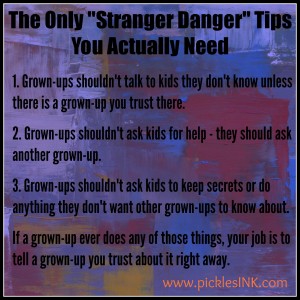
Grown-ups should not talk to kids they don’t know unless there is another grown-up there to make the kids feel safe. Grown-ups should not ask kids for help with anything – they should ask other grown-ups. And grown-ups should not ask kids to keep secrets (surprises are different because they are not going to be kept secrets forever – only until it’s time for the surprise) or to do anything that another grown-up can’t know about.

If a grown-up ever does any of those things, your job is to tell a grown-up that you trust about it right away.”

Stranger Danger Tips

Text reads: “The Only “Stranger Danger” Tips You Actually Need” 1. Grown-ups shouldn’t talk to kids they don’t know unless there is a grown-up you trust there. 2. Grown-ups shouldn’t ask kids for help – they should ask another grown-up. 3. Grown-ups shouldn’t ask kids to keep secrets or do anything they don’t want other grown-ups to know about. If a grown-up ever does any of those things, your job is to tell a grown-up you trust about it right away.

Kid2 listened too, and nodded sagely, though I don’t know how much of the conversation she took in. I was happy with the outcome as Kid1 asked questions, gave me the right answers when I quizzed him, and most importantly felt confident and not frightened when we finished the discussion.

~ karyn

Are you Elsa or Anna? What Frozen says about depression.

We received our pre-ordered* copy of Frozen yesterday, and now that my kids have now watched it about 87 times, I fancy myself somewhat of an expert on the movie. Based on personal experience, I also fancy myself somewhat of an expert on depression. This post is whence the twain shall meet.
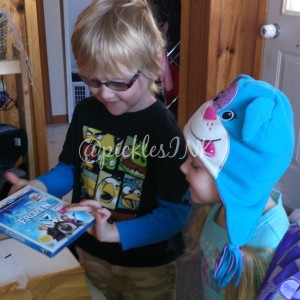
Frozen DVD

Kids 1 and 2 are overjoyed to receive their Frozen DVD

Since Frozen was released in theatres, it has been receiving quite the buzz – I’ve heard about it being an amazingly feminist movie – Disney finally redeeming itself for decades of Princess culture. I’ve heard that it’s allegory for gay pride and/or propaganda for ‘the homosexual agenda.’ I’ve heard from people who refuse to watch it until they stop hearing that goddamn song 8 times a day. I’ve heard from people who love that goddamn song so much that they sing along to it 8 times a day (*cough* me *cough*). And I’ve heard that it’s a piece of irritating garbage with half-rate singers, cheesy melodies, and the worst Princess-related story-line Disney has ever written.

My take on the movie itself? I’m a fan. I enjoyed the music and Disney’s deliberate send-up of its own patriarchal history of damsels in distress, handsome princes on white steeds, and true love at first sight. There was a cute blink-and-you-missed-it nod to diversity with a presumed 2-dad family and a neat twist on the usual moustache-twirling villain. Like so many children’s books and movies though, even with those giant leaps forward it still barely squeaked past the Bechdel test and there wasn’t a person of colour to be found (but no ethnic caricatures, so baby steps, right?).

Now we get to the part of the post about depression – the part that I start hyperventilating every time I think about writing. In so many ways…more and more each time I think about it…Frozen provides a perfect metaphor for depression. Beyond that, Frozen manages to provide dual perspectives – showing us a view of depression from both inside and out.**
Frozen stickers

Are you an Elsa or an Anna – Or maybe both?

We don’t all get literally shut away in our rooms and directed to not let anyone see how we feel, but the messages are all around us, every day:

Snap out of it. ••• Boys don’t cry. ••• Put on your big girl panties. ••• Man up. •••This too shall pass. ••• It could always be worse, right? ••• Behind the clouds, the sun is shining. ••• Every cloud has a silver lining. ••• Tomorrow is another day. ••• What doesn’t kill you makes you stronger. ••• Take it like a man. ••• Don’t air your dirty laundry in public. ••• It’s all in your head. ••• Life’s not fair. ••• Time heals all wounds. ••• Into every life a little rain must fall. ••• Pull yourself together. ••• Try and think about something else. ••• Fake it till you make it. ••• Smile and the world smiles with you, cry and you cry alone.

Like Elsa, many of us with depression are expected to have our ‘moments’ in private, hiding away and telling ourselves over and over, “Don’t let it out. Don’t feel. Don’t let them see,” until we have mastered the knack of acting like regular people, at least when it matters. And when you’re depressed you want to do that anyway – it’s exhausting out there! Like Elsa shut up in her room, I had a mantra in high school – I sang Simon and Garfunkel in my head, over and over – “I am a rock. I am an island. And a rock feels no pain. And an island never cries.” I still get knots in my stomach when I hear that song or even think those words. “Don’t let it out. Don’t feel. Don’t let them see. Don’t feel. Don’t feel. Don’t feel.” Out and about, of course, you do your best to fake it – act normal, keep up with your schoolwork, get good marks; “Don’t let them in. Don’t let them see. Be the good girl you always have to be.”

When depressed, many people, myself included, engage in self-destructive behaviour, either because it gives you an outlet – a real reason, a tangible excuse for all those feels in your head that shouldn’t be there because there’s nothing really wrong, or because it can blunt those feelings, if only temporarily. Many people are also carers – If you spend all of your energy looking after the people around you, you just don’t have time or energy to think about yourself. Bonus points if they are dealing with real actual problems that are worse than your imagined ones so you can tell yourself you’re upset because you’re worried about them!

And like Elsa, for many people there comes a point when it’s just too hard to keep up that façade. Something brushes past your desperately clinging fingers, and all those emotions finally burst out. And often that’s followed by a sense of relief and calm – when you hit rock bottom, you finally have the freedom to be yourself. You don’t have to answer to anyone. You don’t have to pretend anymore. And it doesn’t matter what people think – You are perfectly okay the way you are, and they should just leave you alone and let you be. You’re not hurting anyone, right? It doesn’t concern them. You can build your ice castle up around you, shut the world out and be yourself by yourself.

But as we saw with Elsa, depression doesn’t just stop at being sad. Depression is a selfish illness – and before you react to that statement, please hear me out, because I’ve got the damn thing, so I’m pretty comfy owning that statement. When I’m depressed, I’m pretty effing selfish. When you’re depressed you’re irritable, rage-filled, irrational, unable to enjoy ordinary enjoyable things; you can’t sleep; you sleep too much; you’re lazy and unmotivated – and those traits don’t just impact you. They impact everyone around you. Recall Ben’s, “other kids’ parents play with them, but you don’t.” When you’re depressed, you don’t have the motivation to play with your kids, to tidy your house, or to keep your temper at the best of times, let alone when your kids or spouse are getting to you.

JD Bailey, Honest Mom, has written about the scariest part of depression – the rage. This is a fury that bursts out of you, uncontrollable and terrifying in its intensity. You feel it building inside of you – heart pounding, jaw clenching, until it gets to a point where it’s unstoppable and suddenly you’re lashing out, verbally, physically, mentally. Not everyone experiences the rage, but if you do it’s terrifying – for you and for the people around you. This can be the point for a lot of people when you realize that you need help. Up until now, you have held it all in and let yourself believe that it’s not affecting the people around you – but the first time you create that giant snow monster and set it loose on people, screaming, “DON’T COME BACK, (or “JUST EAT YOUR DINNER,” or “WHY WON’T YOU JUST SLEEP?” the impact on those you love becomes undeniable.

There is a popular depression-themed meme starring Eeyore (of Winnie The Pooh fame), the text of which reads:

One awesome thing about Eeyore is that even though he’s basically clinically depressed, he still gets invited to participate in adventures and shenanigans with all of his friends. And they never expect him to pretend to feel happy; they just love him anyway, and they never leave him behind or ask him to change.

It urges us to accept people with depression as they are, warts, unhappiness, and all – and I agree, up to a point. It is important to let yourself, and your loved ones, feel. If you need to grieve, grieve. If someone is hurting, don’t tell them “It could be worse,” or “Pull yourself together.” People need space to be upset, to be sad, to be angry – but there is an extremely fine line between supporting and enabling. Poor Eeyore – his friends patted him on the back, helped him find his tail, and rebuilt his house of sticks when it got blown away, and I’m sure he really appreciated it. But he was still sad. And at some point, probably one by one, they said, “Oh, screw it, I guess that’s just Eeyore,” and they still let him tag along, because they didn’t want to be mean, and they let him just be his depressed self. And Eeyore was still sad.

And it might not have helped, but then again it might have, if one of them had said, “Hey Eeyore? I know it’s not really any of my business, and I’m not judging you, but we’ve found your tail and fixed your house and it just seems like you’re hurting a lot and you’re never really happy. I care about you and I really want to help you get the help you need.” And maybe Eeyore would have said piss off, which is fair, and hopefully that friend would have said, “Okay, buddy. I’m here though whenever you’re ready.” But maybe Eeyore would have had a good cry on that friend’s shoulder because finally someone got that he was sad, and he didn’t even know why, and he did want to figure out how to stop it, and then maybe he and that friend might have started Googling some options.

Frozen had a happy ending. The much more difficult ending would have been the one where Anna, out of self-preservation, has to let go herself – letting go of guilt and walking away, understanding that whatever that other person decides to do, it is not up to you to change them. There can come a point, in loving someone who is depressed, when you have to love yourself more. I’ve done it. It wasn’t easy and it wasn’t pretty, but it was hands down the best decision I ever made.

Elsa needed Anna, because by herself, she didn’t know that she wasn’t okay, and Anna stepped up and, against all odds, reached out, again and again. People with depression need Annas. It’s hard to do it on your own – first because you don’t always realize that you need help and after that because even when you realize it, that help is not easy to get. Even when Elsa pushed her away, and even when Elsa hurt her, she kept reaching out, until finally Anna was able to break through Elsa’s self-involvement, to show her that isolating herself wasn’t protecting anyone, and that even though her actions were affecting her loved ones, they loved her and wanted her, warts and all – but only the warts she wanted to keep.

Elsa kept her powers – the magic that was integral to her personality – but got the help she needed to be able to control it, not be controlled by it. Her power no longer called the shots. People with depression can be pretty awesome. We often have wicked cool senses of humour – Elsa created Olaf, didn’t she? Scratch the surface of many very funny and talented people (The Bloggess***, and pretty well every other humour blogger in the world) and comedic actors, for example – and you’ll often find depression. We tend to be realists and are pretty comfortable with our own warts…and maybe a little too comfortable pointing out other peoples’.

If, like Elsa and Anna, we find that happy ending, we don’t become different people – we’re generally the same dry, sarcastic, realistic people as before, just a little easier to live with, and finding it a little easier to live with ourselves.

~ karyn

*Pre-ordering? Not actually a thing. You order. You don’t pre-order. Ordering is when you say, “Can I have this when it’s ready?” Pre-ordering would be saying, “Can I have this when it’s ready to be ready?” or something. Like pre-registering – what the heck is that? What do you do when you pre-register? You say, “Sign me up for that thing I want to do! Here’s all my information!” You know what I call that? REGISTERING. Yeesh.

**For another take on Frozen and depression, walk the plank over to Domestic Pirate for a powerful post on how Elsa and Anna represent the two warring voices of depression in her head.

***Seriously – if you haven’t read Let’s Pretend This Never Happened yet, you need to. You will ugly cry and laugh hysterically at the same time. So…uh…like my friend David recommends, try to avoid reading it in public.

Not your mama’s toy shopping tips

‘Tis the season!! As the ground turns snowy and swathes of red and green appear in the dollar store, our thoughts turn to the joyous season of giving.

Christmas store

Dollar Store in October. No joke.

To help you with that giving, I have been carefully poring over toy catalogues to compile a list of my top 10 essential Christmas shopping tips. I really hope that you find them helpful!

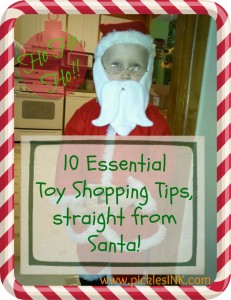
Ben santa

10 Essential Toy Shopping Tips, straight from Santa!

Top 10 Christmas Shopping Tips

(according to a national retail toy catalogue)

Tip #1:

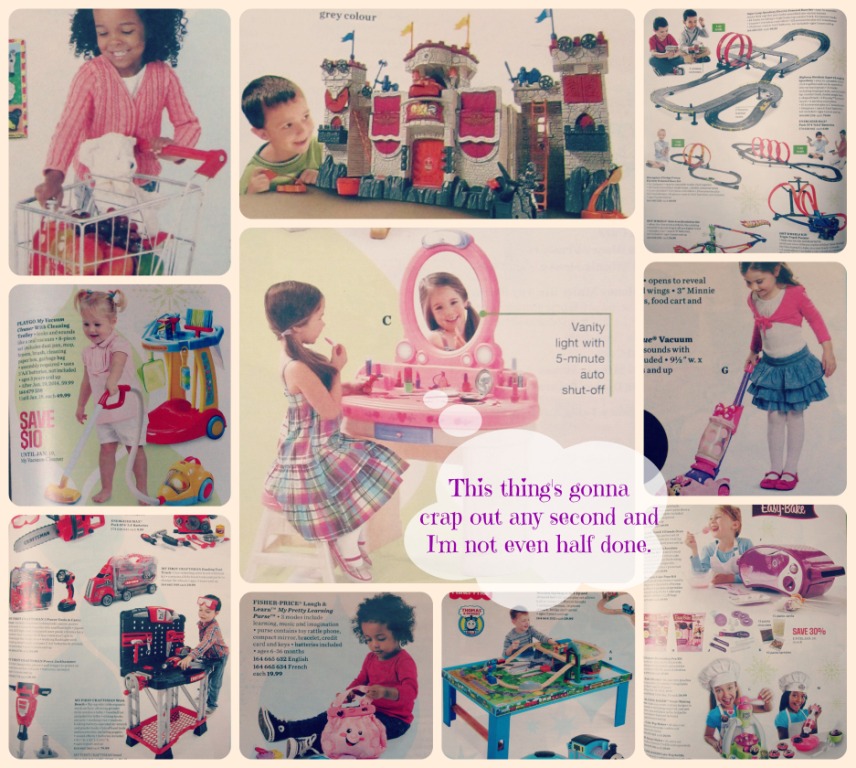
For the little boy in your life, pirate, castle, race car, tool kit and train play sets are always appropriate choices. Don’t accidentally buy one for your little girl, though. She would much rather have a pretty pink purse, baking set, realistic shopping cart, or vanity unit with light – the 5-minute auto shut-off means she won’t get into the habit of primping for too long, and her future husband will appreciate that, amiright? Pair that with her very own vacuum cleaner and cleaning trolley and look at her go!

Graphic for Number 1

Collage of catalogue pages. Thought bubble reads, “This thing’s gonna crap out any second and I’m not even half done.”

Tip #2:

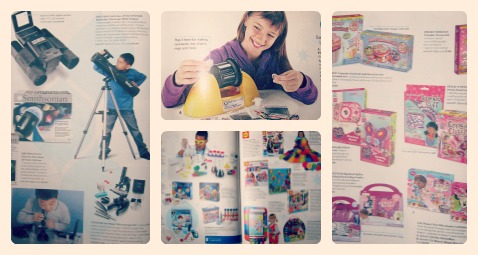
Boys love science, so look for a telescope, chemistry set, microscope, or any of many other assorted science kits with only boys on the boxes. As I’m sure you realize, girls aren’t really good at that sort of thing but they do like to make pretty stuff, so you could try the rock-tumbling kit; maybe she’ll even learn something while creating earrings, necklaces, or keychains! For even more creativity without the distracting science focus, consider any of a wide variety of craft kits.

Graphic for Number 2

Collage of catalogue pages

Tip#3:

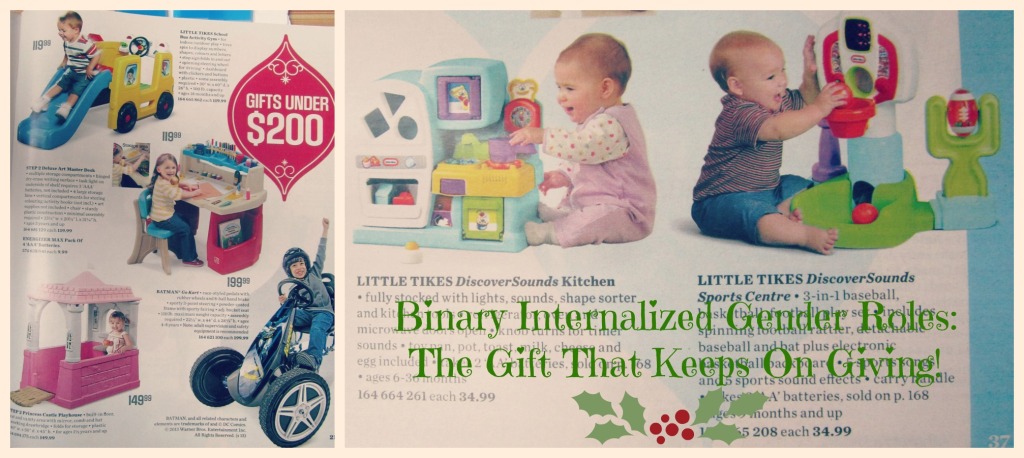
Looking for something a bit bigger? Little girls really like to sit and draw, or even just sit passively and look pretty, so consider a art desk or a pink princess castle playhouse for her. For her brother, how about an activity gym or superhero-themed real go-kart? Those boys really like to get active while their sisters watch! Remember, they’re never too young to start internalizing appropriate gender roles, so consider an infant-sized kitchen play-set for Baby Susie or sports centre for Little Johnny.

Graphic for Number 3

Collage of catalogue pages. Text reads, “Binary Internalized Gender Roles: The Gift That Keeps On Giving!”

Tip #4:

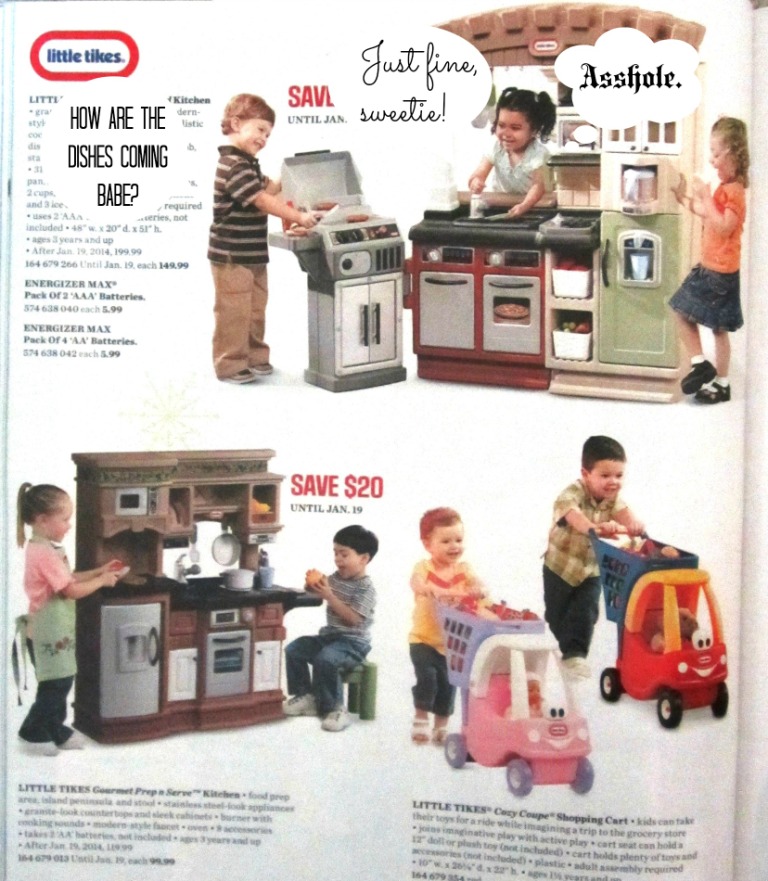
For toddlers and preschoolers, you can’t go wrong with a classic child-sized kitchen play set. It used to be that these were only for the little girl in your life, but we’ve come a long way, baby! Now you can get realistic-looking toy kitchens so that boys and girls can play together – think how much fun your kids will have reinforcing gender stereotypes when she washes dishes while he barbecues, or even better, as she fixes him another sammich while he scarfs down the first!

Graphic for Number 4

Catalogue page. Speech and thought bubbles read: “How are the dishes coming babe?” “Just fine, sweetie!” “Asshole.”

Tip #5:

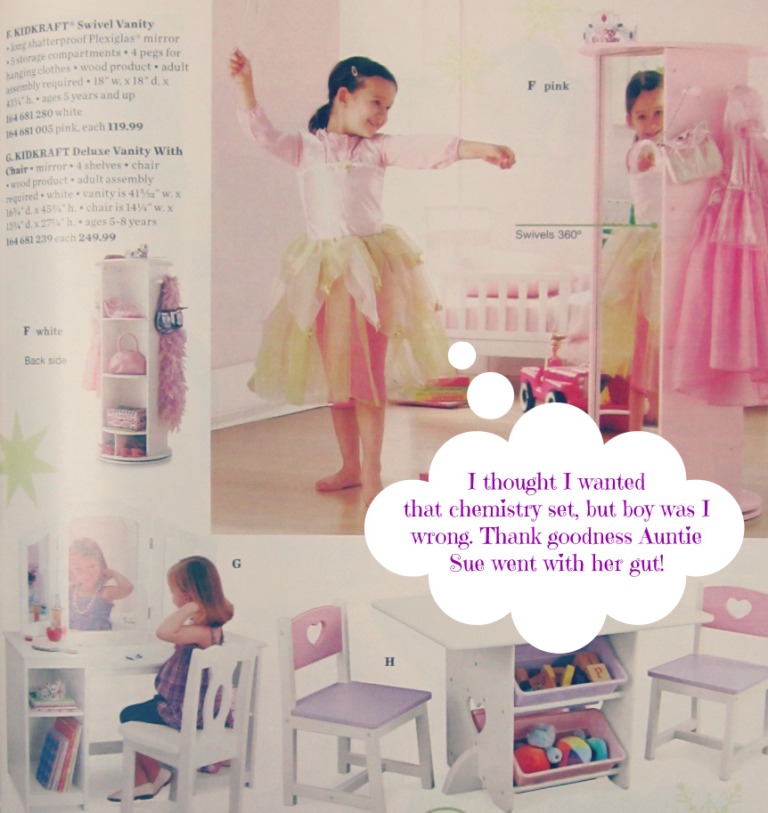
Little girls love to play dress-up and then look at themselves in the mirror, so the only question is: Table-top or full length? (Or how about both?)

Graphic for Number 5

Catalogue page. Thought bubble reads, “I thought I wanted that chemistry set, but boy was I wrong. Thank goodness Auntie Sue went with her gut!”

Tip #6:

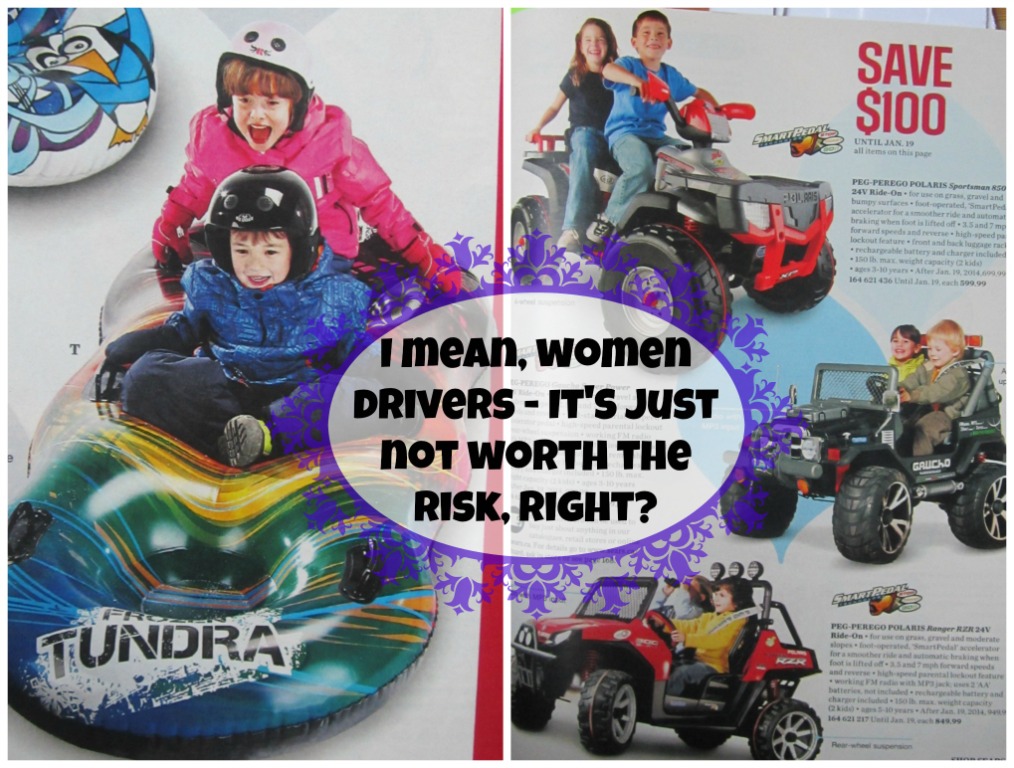
Outdoor toys like sleds, battery-operated cars and other ride-ons are always a hit! If you want your daughter to participate make sure she has a brother or little boy friend who can take the controls because you know what they say about women drivers…

Graphic for Number 6

Collage of catalogue pages. Text reads: “I mean, women drivers – It’s just not worth the risk, right?”

Tip #7:

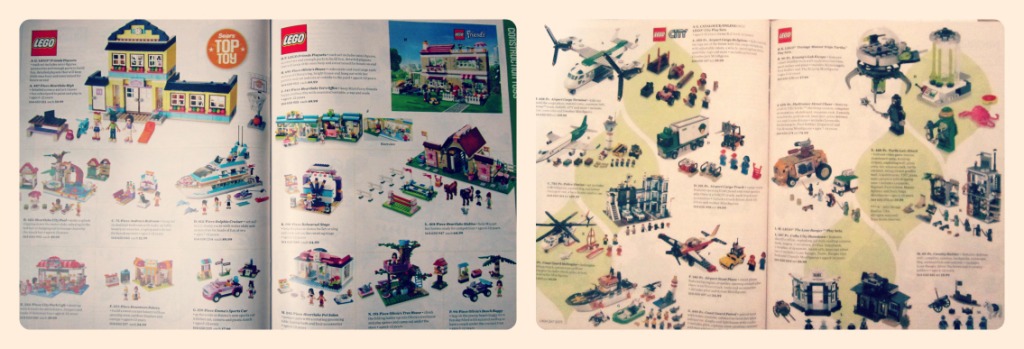
Building sets are also an excellent choice for both boys and girls. The manufacturer makes it easy for the consumer to ascertain which sets are appropriate for boys or girls by selectively gendering the character figures that are included. Your daughters will love building the sets and then grooming horses, pampering pets, hosting sleepovers, or running a bakery with Andrea, Emma, Stephanie, Mia, and Olivia, while your sons will enjoy flying planes, fighting bad guys, and performing open water rescues while identifying with male pilots, lumberjacks, forklift operators, police officers, superheroes, and coast guard members!

Graphic for Number 7

Collage of catalogue pages

Tip #8:

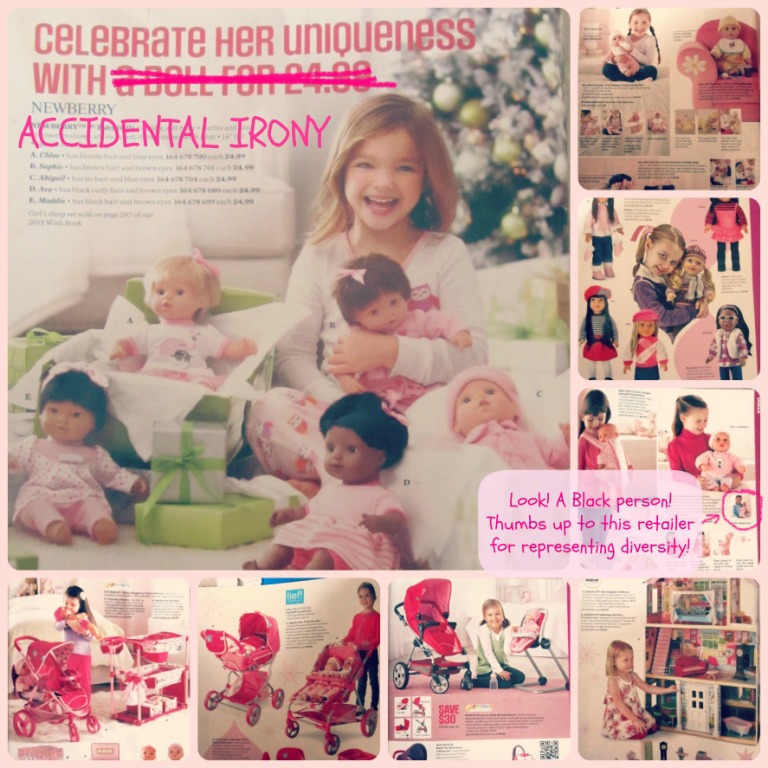
What little girl wouldn’t love a baby doll to cuddle and care for or a little girl doll to be her best friend? With a wide variety of doll furniture and other accessories available in a vast array of shades of pink, your little mommy can dress, change, bath, and feed her little baby to her heart’s content. Since statistics show that the vast majority of little girls are white or just slightly tanned, you will easily be able to find a doll that your daughter can relate to. As the catalogue suggests, “Celebrate her uniqueness” with the gift of unintentional irony! Playing with dolls develops nurturing, caring, and empathy, which is wonderful for girls, but of course we don’t wish to encourage those traits in boys, which brings us to our next tip –

Graphic for Number 8

Collage of catalogue pages – in fact, EVERY SINGLE page in the doll section. Text reads: “CELEBRATE HER UNIQUENESS WITH ACCIDENTAL IRONY” and (pointing to tiny inset photo) “Look! A Black person! Thumbs up to this retailer for representing diversity!”

Tip #9:

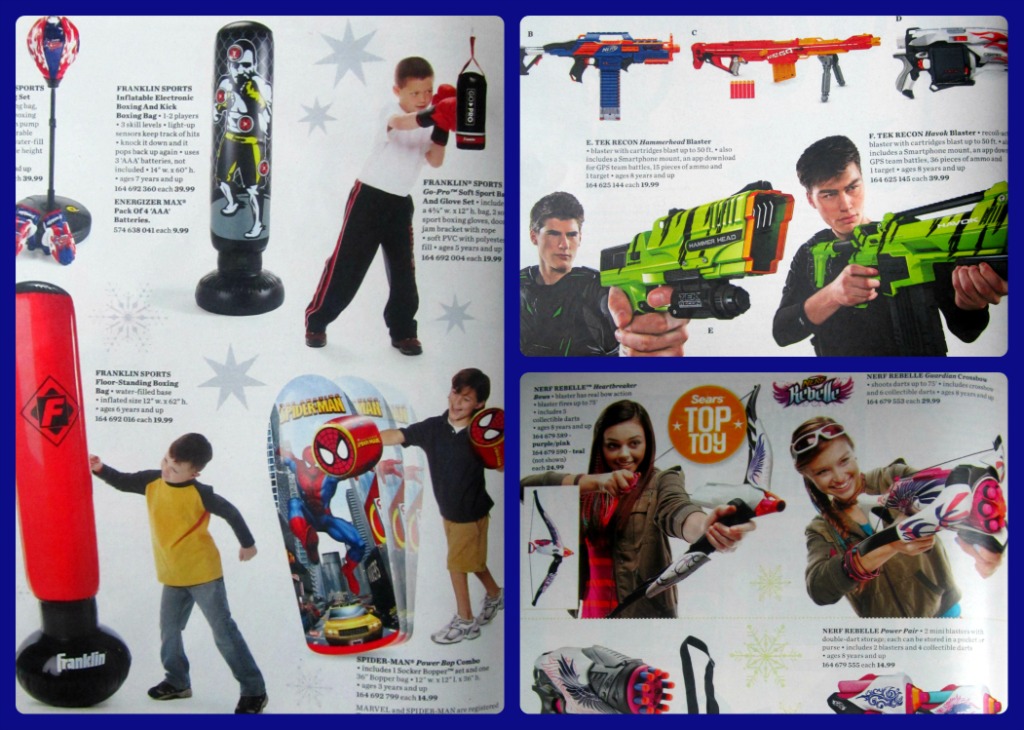
Boys love violence! Luckily there is a wide variety of toys available to feed those urges, including boxing sets, guns, and ammo. For your little Katniss, consider a pink/purple gun, bow, or crossbow – and so you don’t have to say it, the little “Rebelle” logo will remind her every time she sees it that it’s not quite socially appropriate, now, is it?

Graphic for Number 9

Collage of catalogue pages

Tip #10:

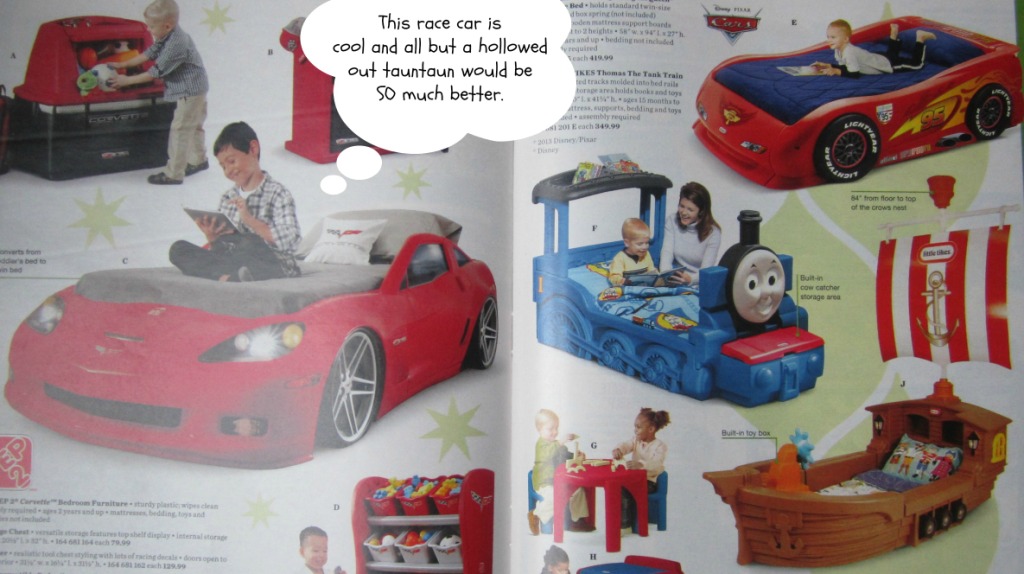
Finally, if toys aren’t really your game, consider furniture. Is your little one outgrowing his crib? Why not get him an awesome toddler bed that looks like a sports car, train, or pirate ship? If you have a daughter, you’ll have to think of something else since a hollowed out fairy princess would be kind of creepy. (Aside – How is it that no-one has made a disemboweled tauntaun toddler bed yet?? Mattel? Little Tikes? This is cross-branding GOLD. You guys will definitely want to get on that. I expect a 10% royalty on every unit sold.)

Graphic for Number 10

Catalogue pages. Thought bubble reads, “This race car is cool and all but a hollowed out tauntaun would be SO much better.”

Special bonus tip #11:

Be aware of the way that toy marketing influences as well as reinforces gender roles. Don’t buy into the marketing gimmick that tells you that you have to go to the separate “girls” section to get a pinkified version of the same familiar toys. Companies aren’t doing it because research has shown that there is a qualitative difference between “boy” stuff and “girl” stuff. They’re doing it because they know they can get you to spend your money twice on the same damn thing.

Listen to your children. Let them develop their own likes and dislikes – don’t let the toy companies do it for them. If your daughter asks Santa for a 44-piece tool kit while your son wants an Easy-Bake oven, congratulate yourself on doing parenting right. (I still use that tool kit – thanks again, Santa!).

The social construction of gender is a cyclical process – advertising doesn’t create those constructs, but it doesn’t try to undermine them either, because retailers make money by giving us what we want to see: Little white girls playing with dolls and boys driving racecars. They think that we won’t be as likely to buy it if they catch us off-guard with something that doesn’t seem quite right, so they (and we) continue to force our hockey-playing girls and our Strawberry Shortcake-loving boys back into those boxes that society has built for them over and over until eventually they decide that they might as well just stay there.

Let kids be kids, not gender constructs. The next time you see a toy catalogue with 9 pages of little (white) girls playing with doll stuff and not a boy in sight, take a cue from Kid1 and shout it out, loud and proud:

“That’s a STEREOTYPE!!”

Collage of photos of boys and girls being themselves

Collage of photos of boys and girls being themselves

Please Note: This is not a sponsored post. All artwork, unless otherwise noted, remains the property of the original photographer. My observations are based on my analysis of trends seen in toy catalogues and do not refer to any specific retailer or manufacturer pictured.