Tag Archive | photography

Sometimes the universe nudges you onto the ‘write’ path

I haven’t really said much about this yet – maybe because I’m still not totally sure it’s actually true – or maybe because there just haven’t been enough hours in the day (damn you, mesmerizing Facebook newsfeed) – but I have a new job! And when I say, “New,” I mean I’ve been doing it for over 6 months now (HOLY CRAP, I just counted that out!).

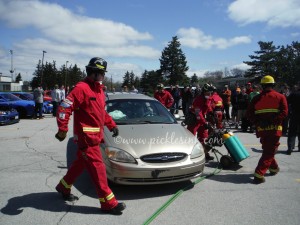
Why yes, this is a gratuitous smokin' hot firemen picture. Why, do you ask? Read on... www.picklesINK.com

Why yes, this is a gratuitous smokin’ hot firemen picture. Why, do you ask? Read on…

I was never, ever going to be a writer. Never. I was going to be a doctor very briefly, until I realized that doctoring was the reason my mom didn’t get home until 8:00 every night.

I probably entertained some vague thoughts of geology or mining engineering, but those were quelled by the 3-foot tall poison ivy my dad casually pointed out on a field trip to look at interesting rocks (“Yep. Right over there by those rocks. No, not those rocks. The other ones. No, the ones to the left. Nope, not those. Even more left.”). Kid2 intends to carry on that proud family tradition by pursuing a career as a rock scientist who’s also a fairy princess and possibly Katy Perry. Note to self: Purchase stock in calamine lotion.

From a long time I was going to be a marine biologist, until I learned that I could never get a scuba licence because of my asthma. “Glub,” went that dream down the drain.

After that I went to school to be a kindergarten teacher until I realized that I can’t stand kids. (Not your kids though. They’re great. Really).

I toyed for a while between social worker and professional barista, which, when you think about it, are pretty similar: You talk people through their problems, figure out what they need to make it through the day, and help them get it. And you make about the same amount of money. Frankly, the only real difference is the quality of the coffee.

Now that I think about it I may have made the wrong choice.

But writing? Never even crossed my mind. Writing was just something you did because you had to, you know, because the filter basket on your coffee-maker is broken and the company wants you to pay for a replacement. Or because your professors look at you funny if you present a research project in interpretive dance. It just happened that when I put words to paper or computer screen, I generally did get my free replacement or reasonably good grade (The same cannot be said re: interpretive dance; never earned me anything but awkwardly averted gazes. Philistines.).

Then I decided to put off going back to school after Kids 1 and 2 were born and started this blog out of sheer peer pressure – people on Facebook kept saying, “You should start a blog,” so finally I did, and then I said, “OKAY FINE I STARTED A BLOG!!! ARE YOU ALL HAPPY NOW??? WILL YOU STOP BUGGING ME ABOUT IT?? GOD!!” which, now that I think about it, would be AWESOME through interpretive dance. *GASP* I HAVE A IDEA!! Challenge issued: Get me to 1000 Facebook followers, and I will post a video. And GO!

Anyway, I started a blog, realized I was writing when I didn’t actually have to and kind of liked it, and people were reading it and I kind of liked that too. Yada yada yada (that’s for Ian and all of you other weird folks who enjoy that awful show that makes me want to stab myself in the earsdrums Seinfeld) was serendipitously offered a job writing for a marketing agency.

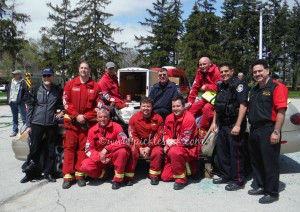
Perks of said job include getting paid to do something I’ve discovered I love, stretching my creative muscles, not just writing but also photography and interviewing, and getting up close and personal with smokin’ hot firemen. It’s a tough job, but somebody’s got to do it!

Smokin' hot firemen group shot.

Smokin’ hot firemen group shot.

I guess what I’ve realized from this journey is that sometimes, even if you think you have a handle on exactly what you want, the universe comes along and gives you a little nudge onto the right path.

~ karyn

Sometimes, even if you think you have a handle on exactly what you want, the universe comes along and gives you a little nudge onto the right path. ~ www.picklesINK.com

Sometimes the universe gives you a little nudge onto the right path.

Not your mama’s toy shopping tips

‘Tis the season!! As the ground turns snowy and swathes of red and green appear in the dollar store, our thoughts turn to the joyous season of giving.

Christmas store

Dollar Store in October. No joke.

To help you with that giving, I have been carefully poring over toy catalogues to compile a list of my top 10 essential Christmas shopping tips. I really hope that you find them helpful!

Ben santa

10 Essential Toy Shopping Tips, straight from Santa!

Top 10 Christmas Shopping Tips

(according to a national retail toy catalogue)

Tip #1:

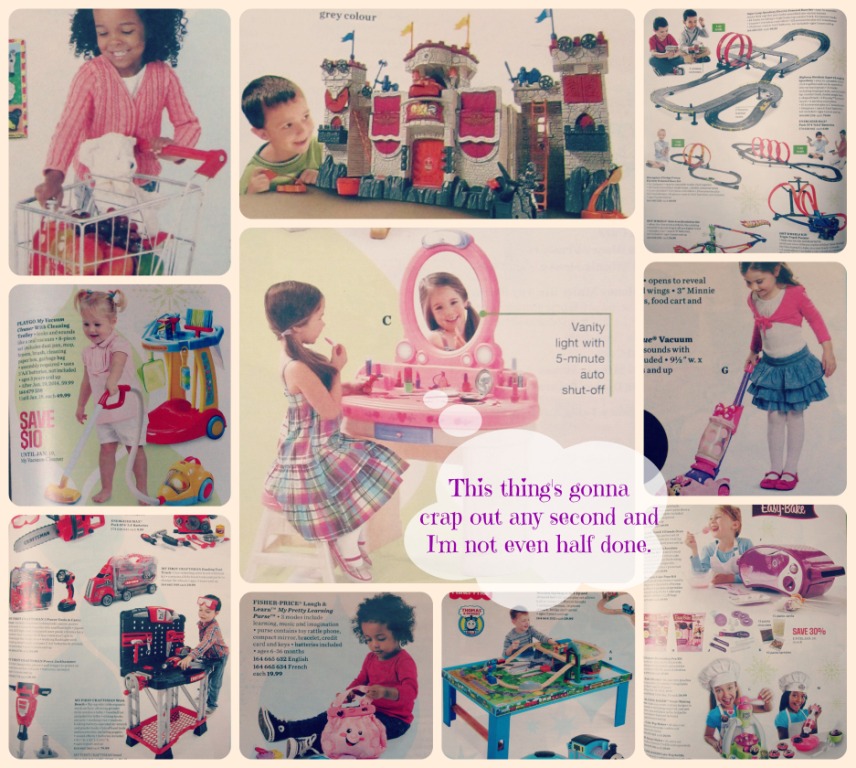
For the little boy in your life, pirate, castle, race car, tool kit and train play sets are always appropriate choices. Don’t accidentally buy one for your little girl, though. She would much rather have a pretty pink purse, baking set, realistic shopping cart, or vanity unit with light – the 5-minute auto shut-off means she won’t get into the habit of primping for too long, and her future husband will appreciate that, amiright? Pair that with her very own vacuum cleaner and cleaning trolley and look at her go!

Graphic for Number 1

Collage of catalogue pages. Thought bubble reads, “This thing’s gonna crap out any second and I’m not even half done.”

Tip #2:

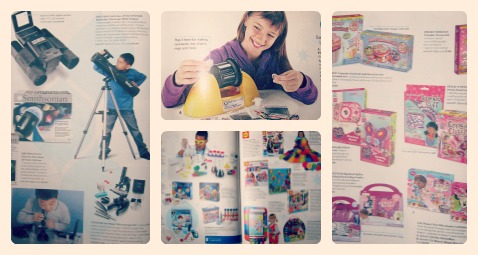
Boys love science, so look for a telescope, chemistry set, microscope, or any of many other assorted science kits with only boys on the boxes. As I’m sure you realize, girls aren’t really good at that sort of thing but they do like to make pretty stuff, so you could try the rock-tumbling kit; maybe she’ll even learn something while creating earrings, necklaces, or keychains! For even more creativity without the distracting science focus, consider any of a wide variety of craft kits.

Graphic for Number 2

Collage of catalogue pages

Tip#3:

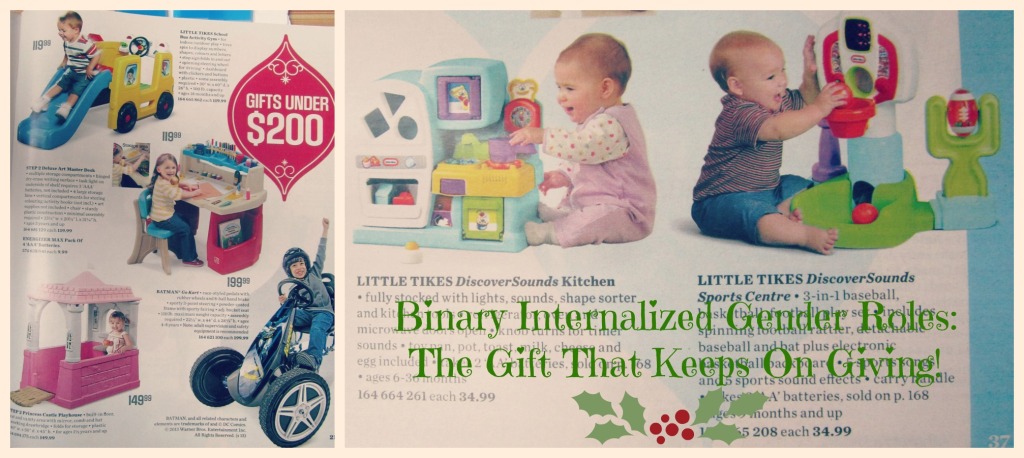
Looking for something a bit bigger? Little girls really like to sit and draw, or even just sit passively and look pretty, so consider a art desk or a pink princess castle playhouse for her. For her brother, how about an activity gym or superhero-themed real go-kart? Those boys really like to get active while their sisters watch! Remember, they’re never too young to start internalizing appropriate gender roles, so consider an infant-sized kitchen play-set for Baby Susie or sports centre for Little Johnny.

Graphic for Number 3

Collage of catalogue pages. Text reads, “Binary Internalized Gender Roles: The Gift That Keeps On Giving!”

Tip #4:

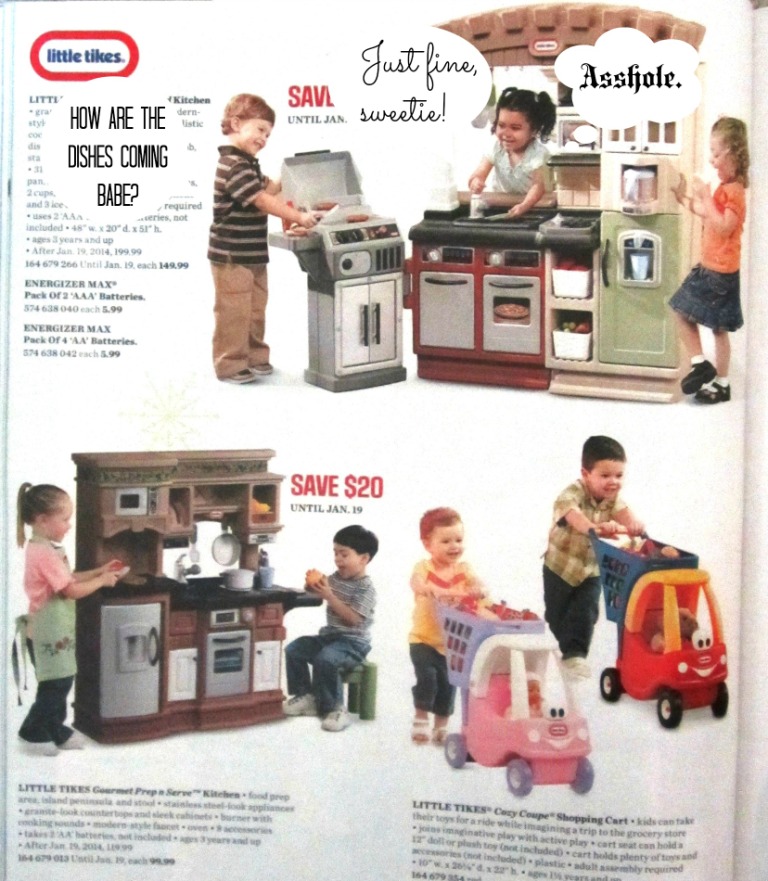
For toddlers and preschoolers, you can’t go wrong with a classic child-sized kitchen play set. It used to be that these were only for the little girl in your life, but we’ve come a long way, baby! Now you can get realistic-looking toy kitchens so that boys and girls can play together – think how much fun your kids will have reinforcing gender stereotypes when she washes dishes while he barbecues, or even better, as she fixes him another sammich while he scarfs down the first!

Graphic for Number 4

Catalogue page. Speech and thought bubbles read: “How are the dishes coming babe?” “Just fine, sweetie!” “Asshole.”

Tip #5:

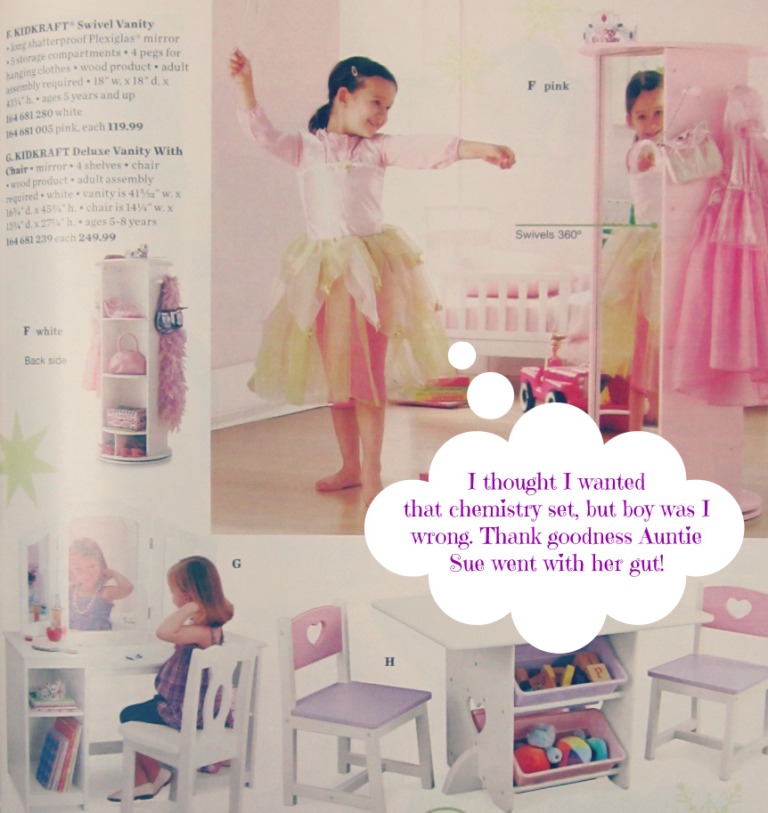
Little girls love to play dress-up and then look at themselves in the mirror, so the only question is: Table-top or full length? (Or how about both?)

Graphic for Number 5

Catalogue page. Thought bubble reads, “I thought I wanted that chemistry set, but boy was I wrong. Thank goodness Auntie Sue went with her gut!”

Tip #6:

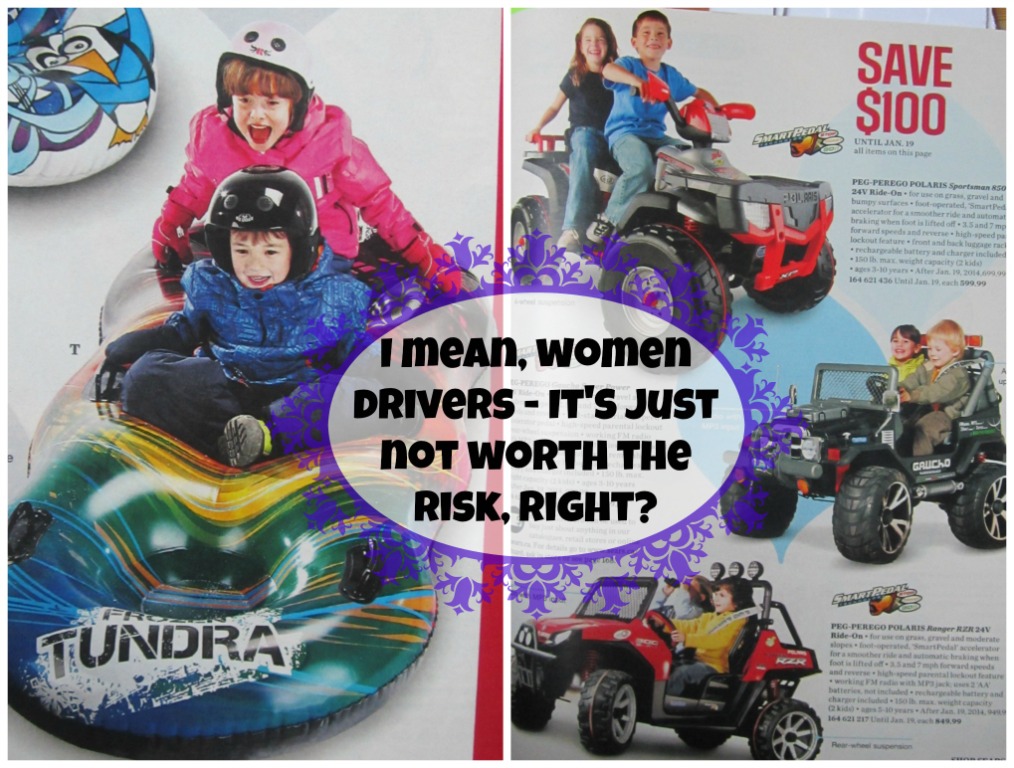
Outdoor toys like sleds, battery-operated cars and other ride-ons are always a hit! If you want your daughter to participate make sure she has a brother or little boy friend who can take the controls because you know what they say about women drivers…

Graphic for Number 6

Collage of catalogue pages. Text reads: “I mean, women drivers – It’s just not worth the risk, right?”

Tip #7:

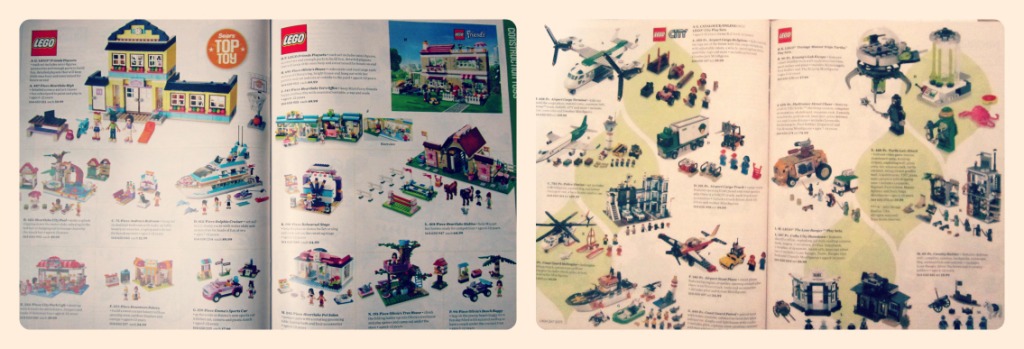
Building sets are also an excellent choice for both boys and girls. The manufacturer makes it easy for the consumer to ascertain which sets are appropriate for boys or girls by selectively gendering the character figures that are included. Your daughters will love building the sets and then grooming horses, pampering pets, hosting sleepovers, or running a bakery with Andrea, Emma, Stephanie, Mia, and Olivia, while your sons will enjoy flying planes, fighting bad guys, and performing open water rescues while identifying with male pilots, lumberjacks, forklift operators, police officers, superheroes, and coast guard members!

Graphic for Number 7

Collage of catalogue pages

Tip #8:

What little girl wouldn’t love a baby doll to cuddle and care for or a little girl doll to be her best friend? With a wide variety of doll furniture and other accessories available in a vast array of shades of pink, your little mommy can dress, change, bath, and feed her little baby to her heart’s content. Since statistics show that the vast majority of little girls are white or just slightly tanned, you will easily be able to find a doll that your daughter can relate to. As the catalogue suggests, “Celebrate her uniqueness” with the gift of unintentional irony! Playing with dolls develops nurturing, caring, and empathy, which is wonderful for girls, but of course we don’t wish to encourage those traits in boys, which brings us to our next tip –

Graphic for Number 8

Collage of catalogue pages – in fact, EVERY SINGLE page in the doll section. Text reads: “CELEBRATE HER UNIQUENESS WITH ACCIDENTAL IRONY” and (pointing to tiny inset photo) “Look! A Black person! Thumbs up to this retailer for representing diversity!”

Tip #9:

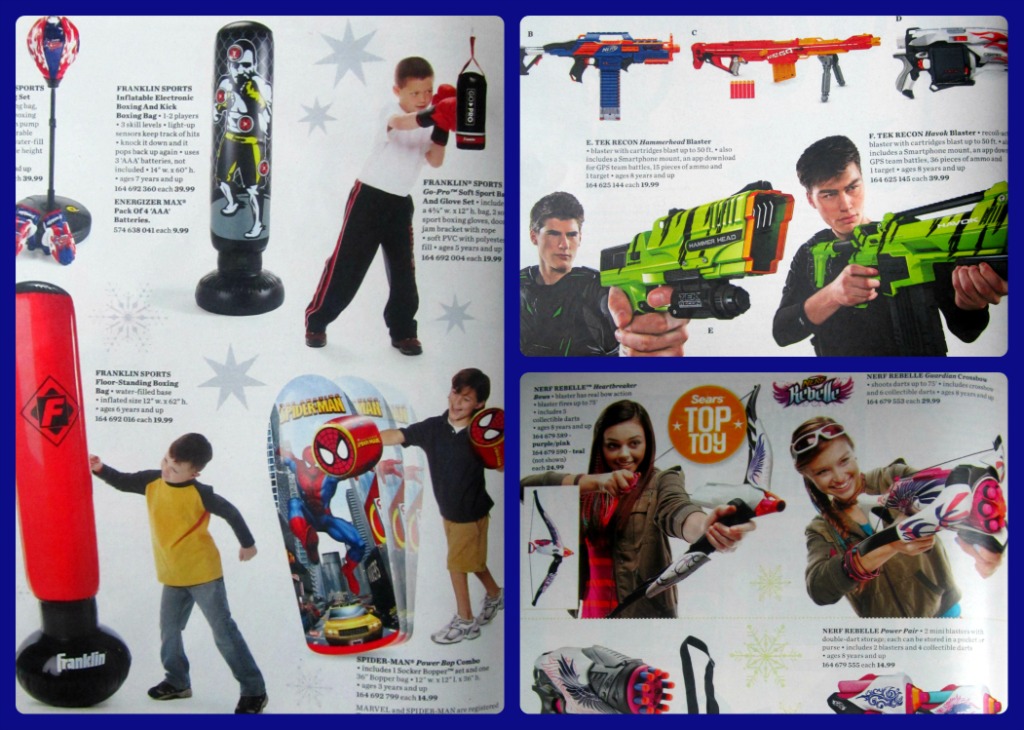
Boys love violence! Luckily there is a wide variety of toys available to feed those urges, including boxing sets, guns, and ammo. For your little Katniss, consider a pink/purple gun, bow, or crossbow – and so you don’t have to say it, the little “Rebelle” logo will remind her every time she sees it that it’s not quite socially appropriate, now, is it?

Graphic for Number 9

Collage of catalogue pages

Tip #10:

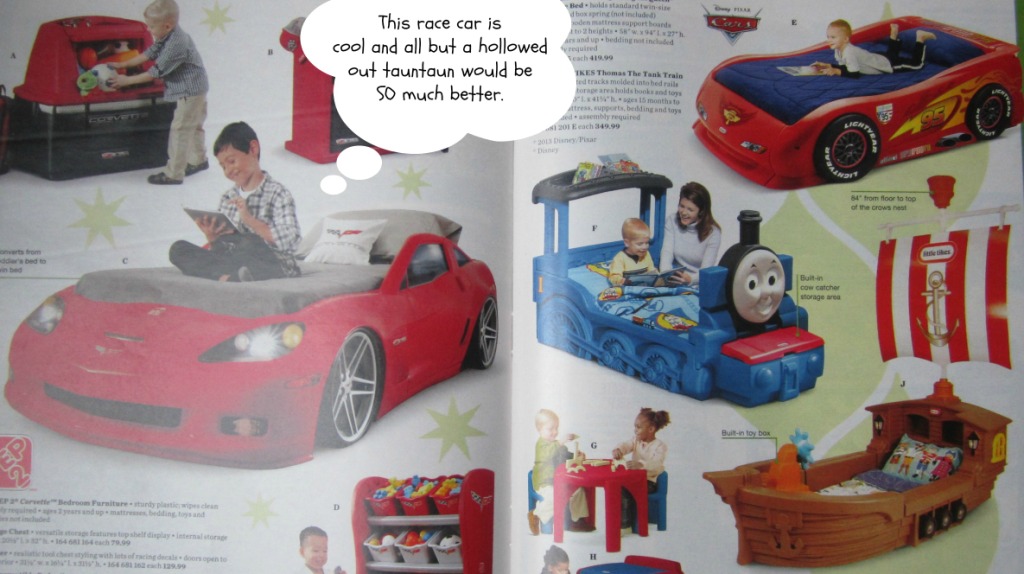
Finally, if toys aren’t really your game, consider furniture. Is your little one outgrowing his crib? Why not get him an awesome toddler bed that looks like a sports car, train, or pirate ship? If you have a daughter, you’ll have to think of something else since a hollowed out fairy princess would be kind of creepy. (Aside – How is it that no-one has made a disemboweled tauntaun toddler bed yet?? Mattel? Little Tikes? This is cross-branding GOLD. You guys will definitely want to get on that. I expect a 10% royalty on every unit sold.)

Graphic for Number 10

Catalogue pages. Thought bubble reads, “This race car is cool and all but a hollowed out tauntaun would be SO much better.”

Special bonus tip #11:

Be aware of the way that toy marketing influences as well as reinforces gender roles. Don’t buy into the marketing gimmick that tells you that you have to go to the separate “girls” section to get a pinkified version of the same familiar toys. Companies aren’t doing it because research has shown that there is a qualitative difference between “boy” stuff and “girl” stuff. They’re doing it because they know they can get you to spend your money twice on the same damn thing.

Listen to your children. Let them develop their own likes and dislikes – don’t let the toy companies do it for them. If your daughter asks Santa for a 44-piece tool kit while your son wants an Easy-Bake oven, congratulate yourself on doing parenting right. (I still use that tool kit – thanks again, Santa!).

The social construction of gender is a cyclical process – advertising doesn’t create those constructs, but it doesn’t try to undermine them either, because retailers make money by giving us what we want to see: Little white girls playing with dolls and boys driving racecars. They think that we won’t be as likely to buy it if they catch us off-guard with something that doesn’t seem quite right, so they (and we) continue to force our hockey-playing girls and our Strawberry Shortcake-loving boys back into those boxes that society has built for them over and over until eventually they decide that they might as well just stay there.

Let kids be kids, not gender constructs. The next time you see a toy catalogue with 9 pages of little (white) girls playing with doll stuff and not a boy in sight, take a cue from Kid1 and shout it out, loud and proud:

“That’s a STEREOTYPE!!”

Collage of photos of boys and girls being themselves

Collage of photos of boys and girls being themselves

Please Note: This is not a sponsored post. All artwork, unless otherwise noted, remains the property of the original photographer. My observations are based on my analysis of trends seen in toy catalogues and do not refer to any specific retailer or manufacturer pictured.

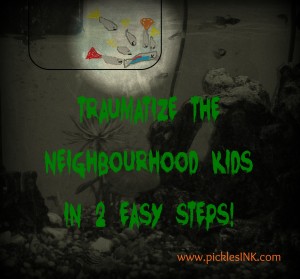
How to Traumatize the Neighbourhood Kids in 2 Easy Steps

How to Traumatize the Neighbourhood Kids in 2 Easy Steps 

  1. Raise your kids to be philosophical about matters of life and death in the animal world.
  2. Let them invite friends over and watch the fun!
Traumatize neighbourhood

“Traumatize the Neighbourhood Kids in 2 Easy Steps!”

My childhood dream was to be a marine biologist, so I have always been interested in keeping tropical fish. Our last aquarium, a 25 gallon freshwater tank with an assortment of tropical fish, made it through our fire as well as 4 moves within 3 homes within 2 cities before settling in its (thus far) final placement in the front hall of our house.

While Kid1 was a toddler, all of the remaining fish passed away one at a time and were not replaced, leaving us with a working, filtering tank, but no livestock, and since I planned to eventually re-stock it, I kept it running…for…uh…five years.

Scene: Kid1 giving the “house tour” to any new guests to our home

Guest: “Wow, a fish tank! How many fish do you have?”

Kid1: “None. They all died.”

Guest: “Oh! That’s too bad…You must have been very sad.”

Kid1: “Not really. They died a long time ago.”

Guest: “Uh…”

Me (in my head): “I really should either empty that tank or get new fish before people start to think we’re weird…uh…er.”

Recently Kid1 became very interested in ichthyology and aquaria (Yay!!! I’m going to live out my childhood dream vicariously through my kid!! But…uh…no pressure, bud…) and begged me to finally nail down a timeline for restoring the tank to its former glory. Two weekends ago we cleaned it (ugh):

SONY DSC

Kid1 cleaning the model coral reef

SONY DSC

Kid2 scrubbing the plastic plants

SONY DSC

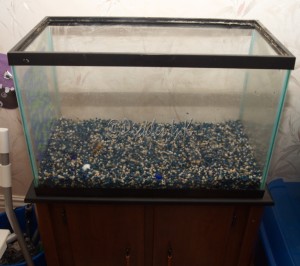
Empty (clean-ish) tank

SONY DSC

Filling the jug to pour into the tank. Funny story: When we went to move the tank for the first time, after the fire (listen, a lot of things happened in our first…uh…month…of marriage) I went to the grocery store to ask if I could pay the $10 deposit for some empty water cooler jugs. The girl refused, saying, “I can’t let you do that because you could bring them back and we wouldn’t know what you had put in them.” I said, “But I assume you don’t just fill them up with water again without sanitizing them first, so what does it matter?” She said, “But you could use them for something gross and then return them.” I said, “Like…uh…cleaning a fish tank? Well, yeah, I could, but I could also get a full one, empty it, and do that anyway.” She said, “I’m not selling you an empty jug.” I said, “Fine,” turned to the guy behind me in line carrying 2 empty jugs, and said, “If I give you the $20 you’d get from her for those, can I have them?” He said, “Sure,” and gave them to me and I smiled at her and walked out.

…and last Friday we got a school of neon tetras and an albino cory to start things off. Sadly, one of the tetras did not survive the weekend.

DSC_1753

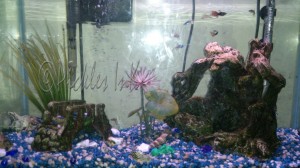
The tank in its current clean and stocked state.

Scene: Kid1 showing his friend the newly stocked tank

Friend: “How many are there?”

Kid1: “Five. There were six but one died. We have to take the body back to the store so they’ll give us a new one. It’s in the freezer.”

Me (in my head): “I’m glad he didn’t mention the part where I accidentally poured the other fish body down the drain.”

I seem to be having bad luck with tetras (or perhaps more accurately, the fish store seems to be having bad luck with them) because we went back to the store yesterday for a school of fan-tail guppies and a replacement neon who promptly up and died in the car on the way home.

Scene: Kid1 and his friend admiring the baggie of new fish acclimating to the tank

Friend: “Look at that little one!”

Kid1: “That’s the dead one.”

Friend: “I like those little ones.”

Kid1: “Those are neon tetras. They’re the same kind as the dead one.”

Me (in my head): “At least they haven’t noticed that the guppies are snacking on the corpse.”

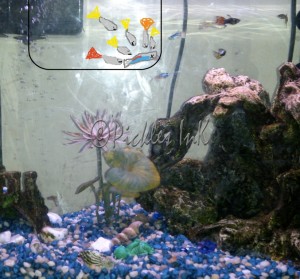
Guppy cannibals

Artists rendition of the cannibalistic guppy feeding frenzy.

Fortunately for all involved they lost interest and went outside to ride bikes before they noticed the cannibalistic guppy feeding frenzy with the other neon standing (swimming? floating?) vigil for their fallen comrade. As my friend Jenn put it, “It’s like some sort of Sicilian mob-devised psychological torture.”

Between this and the fact that a friend posted on Facebook yesterday that she had dreamed about helping my mom and me defend the house from a zombie horde (successfully, so I’ve got that going for me…) I’m a little concerned about what Halloween night might bring.

Uh…Julia? The zombies weren’t by any chance scaly and blue and red striped, were they?

~ karyn

Some memories are best Re-Imagined: Sweatshirt to Skirt Upcycle with a Backstory

Camp memories collage

Collage: Clockwise from left, Me at 9, me now, and sunset over the lake. Text reads “Some memories are best Re-imagined: Sweatshirt to Skirt Upcycle with a Backstory”

I spent my summers from age 7 to age 18 at sleep-away camp in Algonquin Park. It was an incredible place. The girls were on an island, the boys on the mainland. There was a lot of politically incorrect “Indian” business that I really hope has since been corrected but at the same time elicits in me a wistful nostalgia.

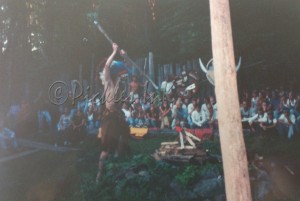
Indian Council Ring (2)

“Indian Council Ring,” in which a lot of rich white kids pretend to be “Indians” and compete in various tests of strength and skill

My brothers, cousins and I were the third generation of our family to attend the camp, which in our modern, disposable world is pretty incredible to think about.

Imagine a beautiful, rustic wilderness setting. No electricity or running water except in the main buildings (and one set of toilets). Freedom, for the most part, from “grown-ups” except for the counselors, who were really just big kids themselves. Spectacular scenery.

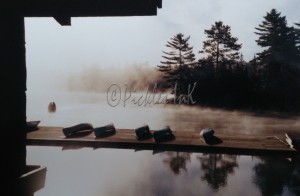
Canoing docks in mist (2)

View of the canoeing docks in the morning mist

Activities included arts and crafts, swimming, canoeing, sailing, windsurfing, horseback riding, and a strong focus on true wilderness canoe-tripping – starting at a 4-day trip when I was 7 and working up to, for most campers, the camp’s celebrated “long trips” of between 21 and 50 days in the remote Canadian wilderness.

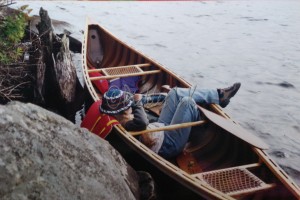
Meg in canoe (2)

Relaxing in a canoe

Now for the flipside: I was an introverted, pudgy asthmatic. I was allergic to horses. I hated mosquitoes. I had passed all the swimming levels I could by the time was 11 and they had nothing else for me to do during the two hours a day of swimming lessons. There were only so many arts and crafts sessions they would let me sign up for. And, to put it quite bluntly, I despised canoe tripping.

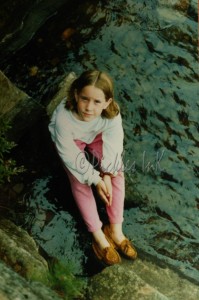
Karyn age 9 (2)

Me, age 9, in my secret reading nook on the water

To me, wilderness excursions are like roller coasters – lots of people love them, and will pay through the nose and wait hours for the opportunity, but me? I can take it or leave it. People think when you say that that you are scared or just inexperienced and the “Aw, c’mon, it’s not that bad, just try it,” is maddening. So when I was a teenager and went to Wonderland, I would always go on Top Gun just once so I could say, “See? Not scared. Just bored. Now if you don’t mind I’m going to grab myself a Slushie and sit in the shade while you guys knock yourselves out standing in line for 2 hours to go around again.”

The same goes for camping. When people ask if I want to go “camping,” usually meaning, “drive to a campground, set up a tent, and roast hotdogs over a fire,” I’ve got to say, “Been there, done that. I can carry a canoe across a 2 km portage and put up an A-frame tent using only sticks, rocks, and 2 paddles, then pack it away again in a roll the size of a loaf of bread. I’m good. I’m going to stick with my air-conditioning and chilled beer, but hey, you guys go nuts.” I absolutely get what people love about it, but it’s just not my cup of tea.

Now that you have a clearer picture of me as a kid, you may understand how my camp experience was less Meatballs and more Lord of the Flies. And that was back before any of this anti-bullying stuff was invented. It wasn’t even called bullying back then – If you weren’t one of the cool kids, it was just life. And I’m not just talking about the other campers. Remember when I said the staff were just big kids? Well, sometimes the biggest kids are the biggest bullies.

I remember learning very early on that there were a lot of “rules” on canoe trip – Official Camp Rules, we were told. Like “camper portions” and “staff portions.” Official Camper Portions were half a pancake each. Official Staff Portions were 3 pancakes (filled with the pannikin-worth of blueberries that the campers were required to pick before they got to eat). Still hungry? Gee, that’s too bad. There’s no batter left. There were Official Camp Rules pertaining to desserts as well – as I understand it, campers were only allowed to eat what dessert remained after the staff were satisfied. Of course, they didn’t like it any more than we did, but what could they do? They didn’t make the rules!

I went on a 7-day trip in Temagami when I was 9 years old. Boy, that trip brings back lots of memories. The elaborate dramas the staff staged for our entertainment, like the one about the escaped axe-murderer from the nearby asylum that the park rangers flew in to warn us about (years later I realized that they had actually landed to caution our staff about too many people sharing a campsite). That charming amateur production ended with one of the male staff racing out of the end of a portage screaming, “GO! GO!” covered in muddy scratch-marks, later explaining that he had been attacked on the trail by a wild, hairy, mud-covered figure, more bear than man, wielding an axe.

Or the one about the man-eating beaver (all right, admittedly, that’s pretty funny now!) over whose dam we were portaging. I was kind of a suspicious 9 year-old, and I sensed something was up when I was hurried along because everyone was waiting for me at the end of the portage. I remember looking across at the slope on the other side of the creek and thinking to myself, “They’re all lined up like they’re sitting at a movie theatre or something,” before I was yelled at to go and join them so we could witness the climax together – the other male staff member racing out, canoe over his head, again covered with mud (stage makeup was hard to come by out there) having “just wrestled himself out of the grip of the rabid creature.”

I don’t think that last one went as smoothly as they planned, so it may have been out of frustration that they involved us campers in the next drama, a playful piece of black humour entitled, “Call the campers over to the staff tent, pin them down, and force-feed them cayenne pepper for shits and giggles.” I kid you not. That actually happened. I kept my lips clamped shut and it still burned for hours. And let me remind you, we were 9 year-old children and these were adults. I told a friend this story as an adult and she said, “Karyn, you realize they were high, right? They had to have been on something.” I think she was probably right.

I think that there was a lack of oversight and compassion at the supervisory level that contributed to the staff resentment which was in turn taken out on the campers. I certainly experienced this during my one and only year as a staff member when I found that days/nights off were generally decided amongst the front-line staff on a “who can get the most people on their side” basis. In my case, at one point, appealing to a higher authority on one occasion did net me grudging permission to take one extra day off to attend my grandmother’s memorial service, provided that I both made up the time doing extra duties later and was back by daybreak the next morning. My older brother was rather uncomfortable dropping me off on the mainland to fulfill this arrangement, but fortunately one of the skills that I had picked up over the years was the ability to quite confidently solo a canoe, in this case across a glassy lake in the middle of the night.

As for my relationships with the other campers, you could to an extent hardly blame them. I certainly didn’t make it easy on myself. Aside from being a moody bookworm, I was also of that compensatorily over-confident non-conformist ilk with an outspoken attitude of “I don’t care if you don’t like me! I don’t have to change myself just to fit in with you jerks.” At school I had a tight-knit anti-clique clique of like-minded folk as a buffer but at camp I was on my own. To be fair as well, there were only a few incidents of actual bullying; it was mostly an over-arching indifference to my presence in general.

There was good stuff too. I think my overall experience would have been better if I hadn’t stayed for so long – I even went back as staff when I was too old to be a camper because it just never occurred to me that I could stop. I met one of my best friends there, and I have skills and memories that many people can only dream of.

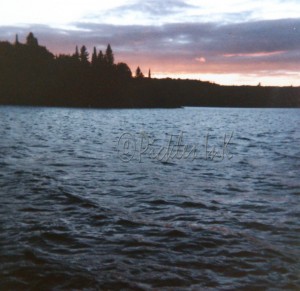
Sunset on the lake (2)

Vintage photo of sunset over the water – taken circa 1987 with a Kodak Instamatic X-15F

Few things can rival the majesty of red pines silhouetted in a Northern Ontario sunset…

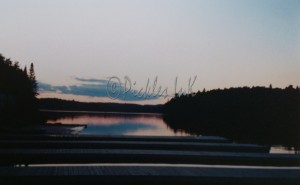
Sunset over docks (2)

Another sunset over the water (slightly newer camera)

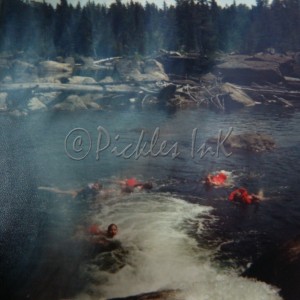
Or the exhilaration of “bum-sliding” down rapids wearing a life-jacket as a diaper…

Paradise Lagoon (2)

I think this is Paradise Lagoon in Temagami – we would have been jumping off a waterfall into the rapids

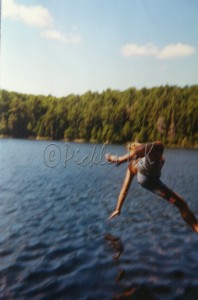
…the thrill of leaping off a 20-foot cliff into a deep lake…

Cliff jumping (2)

This would be Little Island, Little Island Lake, in Algonquin. There was a rope swing suspended from a tree atop a 20-foot cliff and you would swing out as far as you could and drop into the water. Frankly it’s a wonder any of us survived childhood.

…or the serenity of watching a wall of rain slowly move in across a lake. All of these experiences together make up who I am today and I wouldn’t trade that for the world.

But in many ways, life is what you make it, and some of those experiences had to be reimagined or reinterpreted before they could become a useful part of that whole – which is a philosophical way of leading into the tutorial part of this post, in which I show you how I turned a zip-neck sweatshirt into an A-line skirt.

The connection is not quite as tenuous as you might think, as the sweatshirt happened to be my camp staff sweatshirt, which for me symbolized both a link back to that time as well as my symbolic breaking free of whatever hold kept me going there back year after year. For the last 15 years I have hung onto to that sweatshirt but have rarely worn it because I didn’t find it particularly comfortable. It always chafed just a little and never sat quite right.

With this project I took that not-quite-right sweatshirt and turned it into something unique and uniquely suited to me.

Sweatshirt to A-line skirt upcycle

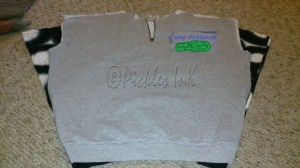
Step 1: Cut sleeves off elastic-waist sweatshirt.

cut off sleeves (2)

Sleeves cut off – check!

Step 2: Turn sweatshirt inside-out, lay it on a flat surface and place a good-fitting skirt (I like A-line) on top of it, lining up the waistbands.

lined up with skirt (2)

Sweatshirt lined up with skirt (I still need to turn it inside out)

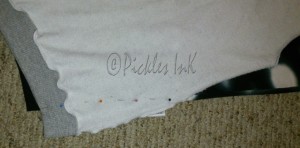
Step 3: Pin the edges of the sweatshirt to match the shape of the skirt.

pinned over skirt (2)

Sweatshirt pinned to match the line of the skirt

Step 4: Trim the bottom of the sweatshirt to your preferred length (the knit material should not need to be hemmed).

Step 5: Sew the edges along where you pinned and then trim.

Step 6: Turn right side out and try on!

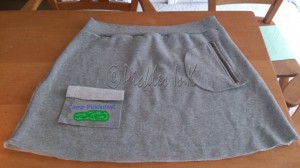
(Optional) Step 7: Embellish or decorate skirt however you like – I used the camp crest and the zipper to create appliquéd pockets by cutting them out and sewing them on around their edges.

appliqued pockets (2)

Pockets positioned and ready to be sewn on

Step 9: Wear and enjoy!!

Karyn modeling skirt (2)

Me in my skirt. Have you ever seen a more uncomfortable-looking model?

*Please note that I made a deliberate choice not to identify the camp by name. I am talking about things that happened more than 20 years ago and I understand that they have worked hard to “clean up their act,” so if you happen to recognize it please do not “out” it in the comments.*

Other parents’ judgement? That’s the leash-t of my worries.

I love Today’s Parent. I don’t always agree with everything in it, but it’s always a good read, and gosh-dang-it, y’all know I’m a sucker for any kind of child development material!

The topic of this month’s “Debate” column is “Should you use a leash to control your toddler?” and I felt it missed the mark. I was frankly offended by Nadine Silverthorne’s assertion that “parents who use leashes look lazy,” and although Amy Morrison’s “Yes” column made a great case for leashes, I was saddened by the caveat that she never actually used one herself due to fear of judgement – a fear that was clearly justified!

Since Today’s Parent hasn’t been able to find anyone willing to admit to actually using a toddler leash, I feel compelled (anyone surprised by that?) to add my own two cents!

Although I use the term “toddler leash” facetiously among friends, it is not at all the same as an animal leash. There is no “obedience training” involved and it is not a punitive device used to jerk back a disobedient pet to ensure compliance born out of fear of a repeat performance. A toddler “leash” or harness is a safety device that allows your child the freedom of walking a few steps away from you while giving you the means to respond effectively to any unexpected danger.

Toddlers value independence above all else. The “Terrible Twos” exist because it is around that age that children first learn to do for themselves, at their own pace, and heaven help the parent who says, “Just let me do it for you!” Is it really fair to strap your fearless little explorer into a 5-point stroller harness just because he or she is too dazzled by the wonderful world around him or her to stop dead every time you shout, “Freeze!”?

Going back to the statement that toddler leash-toting parents “look lazy,” I asked my own mother, who, as a full-time doctor and mother of 3 in the 1980’s is the least lazy person I know (Case in point: She recently returned to work on crutches 9 days after breaking her hip in a skiing accident), what she thinks of parents who use toddler leashes. She responded dryly, “Karyn, if I hadn’t used a toddler leash, your brother Chris wouldn’t be around today.”

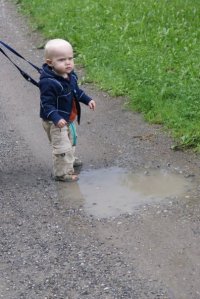
When Kid1 was a toddler, I kept his lightweight harness in my diaper bag, ready to throw on him any time the situation warranted. If I was going to be wandering the Eaton’s Centre or downtown Toronto, or taking a trip to a train station or waterfront with a 2 year-old, you bet your bippy I’d have that leash at the ready!

Ben with leash 2

Kid1, on leash, walking by a river in Germany.
©PicklesINK 2013

It was the best option for both of us – Kid1 was free to explore without being stuck in the stroller or having his hand held (just take a minute to imagine how uncomfortable it must be to have someone much taller than you holding your hand up above your head until it falls asleep, gripping it hard enough that you can’t pull away) and I had the security of knowing that I could stop him if he suddenly bolted towards a hazard.

Ben with leash 3

And off leash!
©PicklesINK 2013

There are certain situations in which even the most anti-leash parent would be unlikely to argue that a safety harness isn’t a good idea:

Ben with harness on sailboat

On a sailboat with a lifejacket and safety harness.
©PicklesINK 2013

(For the record, the harness Kid1 is wearing in the preceding photograph is actually an adult boating harness intended for sailboat racing – safety devices ain’t just for toddlers, y’know.)

And how about in the case of special needs children? If you don’t think that’s appropriate, take a minute to walk a mile in some other parents’ shoes by reading the testimonials on this website from users of special needs child-to-adult harnesses. Or take it straight from the horse’s mouth, so to speak:

I’ve got the best harness in the world. When I first got it I didn’t like wearing it, but now I love my harness. I never get lost and I don’t have to keep holding hands all the time and its comfortable to wear. Big kids and little kids should wear a harness because you are never too old to be kept safe. And I love the colours.

– Tyler, Australia, Age 9, http://www.childharness.ca/testimonials.html

There are important guidelines to follow when using a toddler harness:

1. The whole idea is to give your child the freedom to explore on his or her own terms, so try to follow at his or her pace and guide your child with your words (“Time to go this way! Come on!”). Your child is not a puppy, and the harness is not an choke-chain, so do not jerk him or her back to you.

2. If you aren’t holding the harness, tuck it firmly out of the way, and take it off completely if your child is playing on something like a climber or slide where it could become a strangulation hazard.

3. When it comes to wrist straps, just don’t: If you can manage to get them tight enough to stay on, they’re just a broken wrist waiting to happen.

4. And of course, make sure that you come prepared with pithy rejoinders for those inevitable judgments, such as,

“Well, the breeder suggested that we try this first, but if his behaviour doesn’t improve soon, it’s off to obedience school!”

“Dear God! You’re right! This isn’t my dachshund Olympus – it’s my neighbour’s kid! I can’t believe I did it AGAIN!”

Or the classic, “You know what they say about people in glass houses.”

As Nadine Silverthorne points out, it is our job as parents to teach our children “the rules,” including the expectation that when we say “Freeze,” they will. I say that even more importantly, it is our job to know our own children and to keep them safe whether they are listening or not.  The call-and-response method that she describes is an excellent training tool, but at the toddler age it is simply not foolproof. There is always potential for distraction, and the use of a toddler leash can ensure that a moment’s  impulsiveness doesn’t turn into a life-altering tragedy.

~ karyn (aka that horrible, lazy, toddler-leash-using mom everybody love to judge!)

William Guy Brissenden 1915-2012

Sadly, my grandfather died last weekend at the very impressive age of 97 (and a half). He will be remembered and missed for the love, strength and support that he gave his family and friends, for the many great contributions to the Canadian mining industry during his long life, and also for his selfless service in the Royal Canadian Navy during World War II.

Papa with his great-grandchildren at his 96th birthday party.
©PicklesINK 2012

He had many great loves, including, in no particular order, his beloved wife Jean, golfing, fishing, mining, family, Scotch whiskey, and Queen and country.

Bill, in naval uniform, and Jean
on their wedding day.
©Brissenden Family 2012

Although my Nana died when I was in middle school, I still remember the deep love and devotion that she and Papa had for each other that shone through whenever they were together.

Bill fixing Jean’s shoe
©Brissenden Family 2012

When wintering in Florida, he and Nana rarely missed a day of golf, and he took it upon himself to try to teach each of his grandkids a few tricks of the trade. I remember clearly the day he called (I was around 14) and said, “Karyn, I need you to come over.” He sat me down in his den to watch a video – something like Arnold Palmer’s Guide to the Perfect Swing – and then returned and asked, “So, did you get all that?” (“NO!?”). Then he took me to the backyard, strapped me into a straitjacket-like device that pinned my upper arms to my sides to help me maintain perfect form, and attempted to perfect my golf swing. (It didn’t work.) After a few hours of that, he took me to a mini-golf course (“AHA!” I thought. “Back in my comfort zone!”) where he proceeded thoroughly trounce me.

Papa golfing (probably in Florida).
©Brissenden Family 2012

As a salmon fisherman, he was also untouchable, and enjoyed many trips to salmon rivers around North America.

Papa on the riverbank fishing – if memory serves, this means that he has hooked a salmon while in the canoe and is now working on reeling it in, which is done from the bank.
©Brissenden Family 2012

At 95 he went on his last fishing trip and caught a huge salmon – checking their carefully-kept records (dating back generations), the fishing lodge was able to confirm that he was in fact the oldest person to have caught a salmon of that size.

Papa with his big fish – he swears, it was THIS BIG, and he has photographic proof!
©Brissenden Family 2012

Papa devoted the majority of his working life to mining, and was a giant of the Canadian mining industry.

Papa in an underground mine as a young man.
©Brissenden Family 2012

Papa, back underground, in later years.
©Brissenden Family 2012

Papa was inducted into the Canadian Mining Hall of Fame in 2001, and proudly wore his Mining Hall of Fame pin on the lapel of the suit jacket that he invariably wore whenever he left his bedroom. His biography on the Mining Hall of Fame website reads as follows:

A hands-on approach to problem-solving, forged in both war and peace, enabled William Guy Brissenden to master repeated challenges during a lengthy career spent mostly with Noranda. His extraordinary skills surfaced as a member of the management team that successfully developed Gaspé Copper’s mine, mill and smelter at Murdochville, Quebec. He led Noranda’s team when it acquired control of Brunswick Mining and Smelting, and helped it become the major zinc-lead producer in eastern Canada. A champion of safety and technical innovation, Brissenden is particularly noted for initiating the trackless room-and-pillar mining method, as well as the mechanized cut-and-fill system. On the metallurgical front, he convinced Noranda’s Board to invest in new technology that extended the life of the Horne smelter in Quebec.

Born in Halifax, Nova Scotia, Brissenden obtained a B.Sc. degree in mining engineering from McGill University in 1937, followed by an M.Sc. in 1938. As a naval officer during the Second World War, he solved secret technical problems that helped win the Battle of the Atlantic.

Brissenden joined the Noranda group in 1948 as a mine superintendent and was soon noticed for his ability to grasp and evaluate information and recommend action. His first challenge came at Gaspé Copper, which was then wrestling with how to mine its huge, low-grade underground deposits at a profit. After intensive study, a room-and-pillar method was chosen as the method best suited for the tabular, gently dipping orebodies. Brissenden was the chief architect of the method, which proved so successful that engineers came from around the world to study the operation. The mine operated for 44 years, providing much-needed employment and benefits to the Quebec economy.

At Brunswick, he introduced a mechanized cut-and-fill mining system that allowed production to be increased to 7,500 tonnes per day from 4,500 tonnes. He also converted the Imperial smelting furnace at Belledune to a lead smelter, and implemented environmental improvements at all metallurgical plants.

In the early 1970s, researchers developed a unique concept for continuously smelting copper concentrates. Brissenden supported their efforts and convinced Noranda’s Board to invest in a full-scale prototype at the Horne smelter. The technology proved to be remarkably well-suited to the profitable treating of complex and varied custom materials. Thus, Brissenden helped prevent the loss of about 2,000 jobs when, in 1976, the Horne mine finally stopped hoisting ore.

Brissenden went on to enjoy a successful career as a mining executive, entrepreneur and consulting engineer with the Patino organization and its affiliated companies.

His service to the industry resulted in interactions with many political leaders (with whose politics he did not necessarily agree but with whom he would still have acted the gentleman!), including René Lévesque, Pierre Elliott Trudeau, Lester B. Pearson, John Diefenbaker, and Kim Campbell.

Papa with Lester B. Pearson
©Brissenden Family 2012

Papa with John Diefenbaker
©Brissenden Family 2012

For his 90th birthday, he received a letter from the Prime Minister, Paul Martin. He was of course sorely disappointed with having to settle for a letter from a Liberal, and his strongly held Conservative leaning led him to attend his first political rally at around the age of 90, joining other Canadians in support of George W. Bush (I certainly admired his devotion to a cause).

Papa and his daughters Jane and Janet at the “Canadians for Bush” rally.
©Brissenden Family 2012

Papa was devoted to his family, including his 3 great-grandchildren. When he came to the hospital to visit Kid1, a teeny preemie of almost 5 lbs., he marveled at him and then looked at me and said, “Can you even imagine – I have a great-grandchild?”

Papa meeting his first great-grandchild.
©PicklesINK 2012

He had a soft spot in his heart for Ian, which Ian attributes to their first meeting, when Papa fixed him with his trademark flinty stare and said, “Now why on earth would you do an ARTS degree?” and Ian took a sip of his water, met his eye, and said, “Well sir, the way I see it, any idiot can be an engineer. It takes brains to go into Arts.” What could Papa do but clap him on the shoulder and burst out laughing?

That trademark flinty stare
©Brissenden Family 2012

They continued to bond after that, sharing confidences like the time when, while chatting at a family gathering, Papa leaned in close to Ian and said, “You’re going to have to speak up. I can’t find the batteries for my hearing aids, but these people make such a damn fuss when I don’t wear them that I just put the damn things on anyway and came downstairs.”

Papa’s dry sense of humour never did fail him, even when he suffered a stroke a few years ago. When we visited him in the hospital shortly afterwards, he leaned in close to me and said, sounding slightly confused, “I had a stroke, you know.” I replied, “Yes, I heard that too,” and his eyes narrowed and he said, “I don’t recommend it.”

Papa in hospital bed with his great-grandchildren
©PicklesINK 2012

For a little while after that, he found himself being cared for in a nursing residence before he could go home again, and he took that experience in stride, turning his gentlemanly charm to his advantage. When I asked him how he liked it, he said, “Well, it’s not great. But I did figure out that if you give one of those girls $3, she’ll bring you a Scotch.

Finally, as we approach Remembrance Day, and as we bid farewell to yet another veteran of the Second World War, it is especially important to note Papa’s devotion to Queen and country and service in the Royal Canadian Navy, and I can think of no better way to describe his service than in his own words in a speech delivered to my cousin’s high school a few years ago.

Good morning and thank you for your kind invitation to share with you this Remembrance Day, my 61st since the end of World War II.

What this day means to me, I will leave until later because first I want to share my World War II experiences with you.  I just hope that these experiences may help motivate each and every one of you towards getting the best possible education that you can, because only by doing so will you be able to make, in civilian life or in military life, should that regretfully ever become necessary again, your maximum contribution to society and your country.

When World War II started in the fall of 1939, I was 24 years old and had graduated from university a year earlier with my Masters Degree in Engineering.  I joined the Royal Canadian Navy in October 1940 as a Sub Lieutenant.  By this time in the war, the navy had found itself entering fields that were largely or totally unfamiliar.  The navy was compelled to employ specialists in many fields that were not immediately related to seamanship.  Most of these specialists were entered into a special branch as I was.

One of the critical challenges facing the Canadian, British and later American navies was to keep the sea lanes open from North America to England.  With out the men and material that were sent by ship from North America to England and Europe, it is very possible that the Allied nations would not have won the war against Nazi Germany.  In order for the supply ships to make it to England, the Allied navies had to defeat the threat of German submarines or U-Boats as they were known.  This battle against the German U-Boats became known as the Battle of the Atlantic.

Early in the war, the tactics and technology that eventually defeated the German U-Boats was in its infancy.  After my initial training at the Anti Submarine Warfare School, I was assigned to devise and build the Anti Submarine Fixed Defenses at the entrance to Halifax Harbour.  There were virtually no textbooks to learn from, most of the technology was unfamiliar to the navy and the project had to be completed as soon as possible.  It was to become a colossal undertaking.  As a boy living in Halifax during World War I, I lived through the famous Halifax Explosion, so I knew full well what a catastrophe it would be if a U-Boat managed to get into the harbour and attack the shipping there.

I was very fortunate to have a good team working with me and the system that we designed and built was fully operational by November 1941.  As a result, the Port of Halifax became the safe haven it was meant to be for transatlantic shipping.  Convoys on their way to and from Great Britain regularly formed in its inner harbour with supplies of all kinds, such as food, munitions and other Canadian and American material and of course troops.  Halifax also became the major repair base for Canadian warships.

During the rest of the war, I continued to help develop and build anti submarine defenses for other harbours in Canada and England and after transfer to Naval Service Headquarters helped co-ordinate the development of advanced anti submarine detection devices.  As the war continued we were able to improve our anti submarine tactics and technology to a point that the submarine threat was significantly reduced and ultimately the Battle of the Atlantic was won.

On a more personal level, Remembrance Day brings back memories of loved ones.  I like most Canadians at that time faced the loss of family members and close friends.  One of my brothers and one of my wife’s brothers did not return from the war.  Friends with whom I had worked before the war also made the ultimate sacrifice.   Over the past 61 years I look at what a wonderful country Canada has become and often think of the debt of honour all of us owe to these heroes that never returned home.

I retired from the navy at the end of the war as a Lieutenant Commander.  It was a privilege serving my country and I was glad I did, but I was thankful that it was over.  I was very proud that my education allowed me the opportunity to serve with so many special people and to make a significant contribution to the war effort.  I hope that my experience will encourage you to pursue your education, not only for your own benefit, but also for the benefit of our society and our country.

Thank you.

As Kid1 put it, “Mommy, our family is just not going to be the same without Papa, is it?” and no, it isn’t, but he has been a role model in so many ways to so many people that his legacy will live on, and I’m glad that he has moved peacefully onto the next stage of his journey.

Nana and Papa camping,
Nana looking as polished as ever!
©PicklesINK 2012

~ karyn