Tag Archive | humor

Are you Elsa or Anna? What Frozen says about depression.

We received our pre-ordered* copy of Frozen yesterday, and now that my kids have now watched it about 87 times, I fancy myself somewhat of an expert on the movie. Based on personal experience, I also fancy myself somewhat of an expert on depression. This post is whence the twain shall meet.
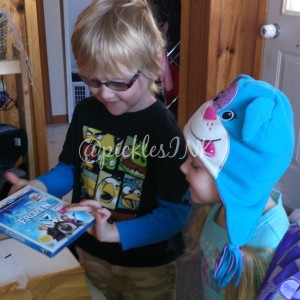
Frozen DVD

Kids 1 and 2 are overjoyed to receive their Frozen DVD

Since Frozen was released in theatres, it has been receiving quite the buzz – I’ve heard about it being an amazingly feminist movie – Disney finally redeeming itself for decades of Princess culture. I’ve heard that it’s allegory for gay pride and/or propaganda for ‘the homosexual agenda.’ I’ve heard from people who refuse to watch it until they stop hearing that goddamn song 8 times a day. I’ve heard from people who love that goddamn song so much that they sing along to it 8 times a day (*cough* me *cough*). And I’ve heard that it’s a piece of irritating garbage with half-rate singers, cheesy melodies, and the worst Princess-related story-line Disney has ever written.

My take on the movie itself? I’m a fan. I enjoyed the music and Disney’s deliberate send-up of its own patriarchal history of damsels in distress, handsome princes on white steeds, and true love at first sight. There was a cute blink-and-you-missed-it nod to diversity with a presumed 2-dad family and a neat twist on the usual moustache-twirling villain. Like so many children’s books and movies though, even with those giant leaps forward it still barely squeaked past the Bechdel test and there wasn’t a person of colour to be found (but no ethnic caricatures, so baby steps, right?).

Now we get to the part of the post about depression – the part that I start hyperventilating every time I think about writing. In so many ways…more and more each time I think about it…Frozen provides a perfect metaphor for depression. Beyond that, Frozen manages to provide dual perspectives – showing us a view of depression from both inside and out.**

Frozen stickers

Are you an Elsa or an Anna – Or maybe both?

We don’t all get literally shut away in our rooms and directed to not let anyone see how we feel, but the messages are all around us, every day:

Snap out of it. ••• Boys don’t cry. ••• Put on your big girl panties. ••• Man up. •••This too shall pass. ••• It could always be worse, right? ••• Behind the clouds, the sun is shining. ••• Every cloud has a silver lining. ••• Tomorrow is another day. ••• What doesn’t kill you makes you stronger. ••• Take it like a man. ••• Don’t air your dirty laundry in public. ••• It’s all in your head. ••• Life’s not fair. ••• Time heals all wounds. ••• Into every life a little rain must fall. ••• Pull yourself together. ••• Try and think about something else. ••• Fake it till you make it. ••• Smile and the world smiles with you, cry and you cry alone.

Like Elsa, many of us with depression are expected to have our ‘moments’ in private, hiding away and telling ourselves over and over, “Don’t let it out. Don’t feel. Don’t let them see,” until we have mastered the knack of acting like regular people, at least when it matters. And when you’re depressed you want to do that anyway – it’s exhausting out there! Like Elsa shut up in her room, I had a mantra in high school – I sang Simon and Garfunkel in my head, over and over – “I am a rock. I am an island. And a rock feels no pain. And an island never cries.” I still get knots in my stomach when I hear that song or even think those words. “Don’t let it out. Don’t feel. Don’t let them see. Don’t feel. Don’t feel. Don’t feel.” Out and about, of course, you do your best to fake it – act normal, keep up with your schoolwork, get good marks; “Don’t let them in. Don’t let them see. Be the good girl you always have to be.”

When depressed, many people, myself included, engage in self-destructive behaviour, either because it gives you an outlet – a real reason, a tangible excuse for all those feels in your head that shouldn’t be there because there’s nothing really wrong, or because it can blunt those feelings, if only temporarily. Many people are also carers – If you spend all of your energy looking after the people around you, you just don’t have time or energy to think about yourself. Bonus points if they are dealing with real actual problems that are worse than your imagined ones so you can tell yourself you’re upset because you’re worried about them!

And like Elsa, for many people there comes a point when it’s just too hard to keep up that façade. Something brushes past your desperately clinging fingers, and all those emotions finally burst out. And often that’s followed by a sense of relief and calm – when you hit rock bottom, you finally have the freedom to be yourself. You don’t have to answer to anyone. You don’t have to pretend anymore. And it doesn’t matter what people think – You are perfectly okay the way you are, and they should just leave you alone and let you be. You’re not hurting anyone, right? It doesn’t concern them. You can build your ice castle up around you, shut the world out and be yourself by yourself.

But as we saw with Elsa, depression doesn’t just stop at being sad. Depression is a selfish illness – and before you react to that statement, please hear me out, because I’ve got the damn thing, so I’m pretty comfy owning that statement. When I’m depressed, I’m pretty effing selfish. When you’re depressed you’re irritable, rage-filled, irrational, unable to enjoy ordinary enjoyable things; you can’t sleep; you sleep too much; you’re lazy and unmotivated – and those traits don’t just impact you. They impact everyone around you. Recall Ben’s, “other kids’ parents play with them, but you don’t.” When you’re depressed, you don’t have the motivation to play with your kids, to tidy your house, or to keep your temper at the best of times, let alone when your kids or spouse are getting to you.

JD Bailey, Honest Mom, has written about the scariest part of depression – the rage. This is a fury that bursts out of you, uncontrollable and terrifying in its intensity. You feel it building inside of you – heart pounding, jaw clenching, until it gets to a point where it’s unstoppable and suddenly you’re lashing out, verbally, physically, mentally. Not everyone experiences the rage, but if you do it’s terrifying – for you and for the people around you. This can be the point for a lot of people when you realize that you need help. Up until now, you have held it all in and let yourself believe that it’s not affecting the people around you – but the first time you create that giant snow monster and set it loose on people, screaming, “DON’T COME BACK, (or “JUST EAT YOUR DINNER,” or “WHY WON’T YOU JUST SLEEP?” the impact on those you love becomes undeniable.

There is a popular depression-themed meme starring Eeyore (of Winnie The Pooh fame), the text of which reads:

One awesome thing about Eeyore is that even though he’s basically clinically depressed, he still gets invited to participate in adventures and shenanigans with all of his friends. And they never expect him to pretend to feel happy; they just love him anyway, and they never leave him behind or ask him to change.

It urges us to accept people with depression as they are, warts, unhappiness, and all – and I agree, up to a point. It is important to let yourself, and your loved ones, feel. If you need to grieve, grieve. If someone is hurting, don’t tell them “It could be worse,” or “Pull yourself together.” People need space to be upset, to be sad, to be angry – but there is an extremely fine line between supporting and enabling. Poor Eeyore – his friends patted him on the back, helped him find his tail, and rebuilt his house of sticks when it got blown away, and I’m sure he really appreciated it. But he was still sad. And at some point, probably one by one, they said, “Oh, screw it, I guess that’s just Eeyore,” and they still let him tag along, because they didn’t want to be mean, and they let him just be his depressed self. And Eeyore was still sad.

And it might not have helped, but then again it might have, if one of them had said, “Hey Eeyore? I know it’s not really any of my business, and I’m not judging you, but we’ve found your tail and fixed your house and it just seems like you’re hurting a lot and you’re never really happy. I care about you and I really want to help you get the help you need.” And maybe Eeyore would have said piss off, which is fair, and hopefully that friend would have said, “Okay, buddy. I’m here though whenever you’re ready.” But maybe Eeyore would have had a good cry on that friend’s shoulder because finally someone got that he was sad, and he didn’t even know why, and he did want to figure out how to stop it, and then maybe he and that friend might have started Googling some options.

Frozen had a happy ending. The much more difficult ending would have been the one where Anna, out of self-preservation, has to let go herself – letting go of guilt and walking away, understanding that whatever that other person decides to do, it is not up to you to change them. There can come a point, in loving someone who is depressed, when you have to love yourself more. I’ve done it. It wasn’t easy and it wasn’t pretty, but it was hands down the best decision I ever made.

Elsa needed Anna, because by herself, she didn’t know that she wasn’t okay, and Anna stepped up and, against all odds, reached out, again and again. People with depression need Annas. It’s hard to do it on your own – first because you don’t always realize that you need help and after that because even when you realize it, that help is not easy to get. Even when Elsa pushed her away, and even when Elsa hurt her, she kept reaching out, until finally Anna was able to break through Elsa’s self-involvement, to show her that isolating herself wasn’t protecting anyone, and that even though her actions were affecting her loved ones, they loved her and wanted her, warts and all – but only the warts she wanted to keep.

Elsa kept her powers – the magic that was integral to her personality – but got the help she needed to be able to control it, not be controlled by it. Her power no longer called the shots. People with depression can be pretty awesome. We often have wicked cool senses of humour – Elsa created Olaf, didn’t she? Scratch the surface of many very funny and talented people (The Bloggess***, and pretty well every other humour blogger in the world) and comedic actors, for example – and you’ll often find depression. We tend to be realists and are pretty comfortable with our own warts…and maybe a little too comfortable pointing out other peoples’.

If, like Elsa and Anna, we find that happy ending, we don’t become different people – we’re generally the same dry, sarcastic, realistic people as before, just a little easier to live with, and finding it a little easier to live with ourselves.

~ karyn

*Pre-ordering? Not actually a thing. You order. You don’t pre-order. Ordering is when you say, “Can I have this when it’s ready?” Pre-ordering would be saying, “Can I have this when it’s ready to be ready?” or something. Like pre-registering – what the heck is that? What do you do when you pre-register? You say, “Sign me up for that thing I want to do! Here’s all my information!” You know what I call that? REGISTERING. Yeesh.

**For another take on Frozen and depression, walk the plank over to Domestic Pirate for a powerful post on how Elsa and Anna represent the two warring voices of depression in her head.

***Seriously – if you haven’t read Let’s Pretend This Never Happened yet, you need to. You will ugly cry and laugh hysterically at the same time. So…uh…like my friend David recommends, try to avoid reading it in public.

Vaguebooking was in Vogue Today

I hate Vaguebooking more than many things in life, and I did it all day today, so my apologies to those of you would saw my day bookended by the twin statii

Dear Driver Who Slowed Down to Look as He/She passed Me Lying In the Snow Trying to Dig Out My Car in My Driveway on a Private Road with Only About 30 Residents and then Continued His/Her Merry Way,

You are a jerk.

No love, Me.

and

Quick PSA: When someone is having a complete breakdown in front of you and just barely holding it together because they’ve had a really shitty day and this is the last straw, the appropriate answer is NEVER, EVER “Oooh…well, it could be worse.” Yes, it could be worse. I could be dying of cancer. I could have a splinter in my foot. I could be having my arm gnawed off by a walrus. Yes, things could be worse. But right now, at this moment, for me, it is bad enough. Don’t minimize that.

To clear up the mystery that I’m sure has been haunting each of you all day – “What the heck happened to Karyn today?” I present to you “The Last 12 Hours of My Life” [as in, the 12 hours immediately preceding the time that is now, not to be confused with the final 12 hours of my life, which I hope will take place far in the future].

Prologue: It’s March Break. Kids 1 and 2 and I are up at my parents’ ski chalet, which is on very small, private (as in, not municipally maintained) crescent. There are 20, maybe 30 chalets in all on this road. The kids are in a ski day camp. Yesterday the weather was balmy. Today there was a massive snowstorm.

9:10 AM Realized we had plenty of time. Let Kids 1 and 2 continue playing before getting ready to go.

9:30 AM Told Kids 1 and 2 it was time to get ready to go. They did not share my sense of urgency.

10:00 AM Actually got out the door and into the car. Realized that my decision to park in the middle of the half-circle driveway facing the steeper exit was not my best ever.

10:02 AM Kid1: “We’re stuck, aren’t we?” Car: “whuh-ERRRRRRR” Kid1: “Yep. We’re stuck.”

10:02-10:30 AM Tried to dig the car out with bare hands and a snow brush.

10:30 AM Abandoned the idea of getting the kids to ski school and sent them inside. Put on mitts. Searched, unsuccessfully, for a shovel. Continued, unsuccessfully, to try to dig car out with snow brush. Watched Jerk #1 drive by slowly.

10:45 AM Gave up and went inside.

12:00 PM Dressed warmly, armed myself with a broom, and went back out to try again.

12:00-12:30 PM Alternated laying on the ground digging under the car with broom handle and trying to rock the car out in reverse. Watched Jerk #2 drive by, slowing down for a good look at the chick lying under her car.

12:30 PM Knocked on neighbours’ door.

12:30-1:00 PM Lovely older couple with much better tools than my broom and snow brush dug the car out. With me and her pushing, he successfully backed the car out of the snowbank and into the snowbank on the other side of the driveway.

1:00-1:10 PM Dug the car out of that snowbank and pushed it up onto the road.

1:15 PM Loaded the kids into the car and took them up to the hill for their afternoon session.

1:45 PM Kid2 refused to ski.

2:50 PM Put Kid2 into the car and tried to pull out of parking space. Stuck. For once someone ACTUALLY STOPPED and pushed me out. Yay!

3:00 PM Picked Kid1 up and drove back down the hill. Discovered that the entrance to the private road had been blocked by the municipal plow. Tried to dig it out with Kid1’s ski. Municipal plow drove by, presumably laughing at me.

3:15 PM Drove back up to the ski hill, explained the situation, and shakily asked to borrow a shovel. Lady at the desk said, “Oh my! You’re about to have a breakdown, aren’t you?” Burst into tears. She had a girl take me out to find the shovel. Girl said comfortingly, “Oh, well…it could be worse though.” I said, “True. I could be facing charges for having kicked in your stupid teeth, you thoughtless walnut… Uh-huh.”

3:25-3:40 PM Shoveled out the road, stopping to give thumbs up to Jerks #3-12, who drove by without stopping. Special honourable mention to Giant Jerkwad Supreme in the pick-up truck with the plow attachment who could have done it for me in one pass. Drove home to the chalet. Backed into parking space. Pretty sure I’m stuck again but no longer care.

3:45 PM Phoned Municipal Public Works office and was assured that blocking in the private road was standard practice, as was ignoring motorists stranded by the aforementioned action. “If the plow driver stopped to help ever stranded motorist, we’d never get the roads cleared.” Hung up on him. Got a big cuddle from Kid1. Felt marginally better.

4:00 PM My mom called. She agreed that John from Public Works was a dick and all the people who didn’t stop were jerks. Felt somewhat better.

4:15-5:30 PM Chatted with friends and received “likes” on Vaguebook. Felt significantly better.

5:30 PM Built a fire and toasted and ate 1 bag of marshmallows (with the help of the kids). Felt quite a lot better but now slightly ill.

9:10 PM Finally was able to see the humour and wrote this post.

Epilogue: In conclusion

1. Yes, it definitely could be worse. I have a pretty awesome life, and at no point was I or any of my loved ones in danger of losing it. But still, sometimes things suck and you get upset…and whatever has caused it, telling a person who is upset about their particular circumstances, “It could be worse,” is not comforting, it is invalidating and minimizing. So if, “smack upside the head to give perspective,” is what you’re going for, then by all means, say that, but if you’re aiming for “comfort and console,” try a simple, “That sucks. I’m sorry.”

2. People are stupid jerks, but it’s nothing a roaring fire and a bag of toasted icing sugar, artificial vanilla flavouring, and gelatin can’t fix.

~ karyn

breakdown picture

Text reads: “If someone is having a breakdown in front of you because they’ve had a really shitty day and this is the last straw, the appropriate answer is NEVER, EVER “Oooh…well, it could be worse.” Yes, it could be worse. I could be dying of cancer. I could have a splinter in my foot. I could be having my arm gnawed off by a walrus. But right now, at this moment, for me, it is bad enough. Don’t minimize that.”

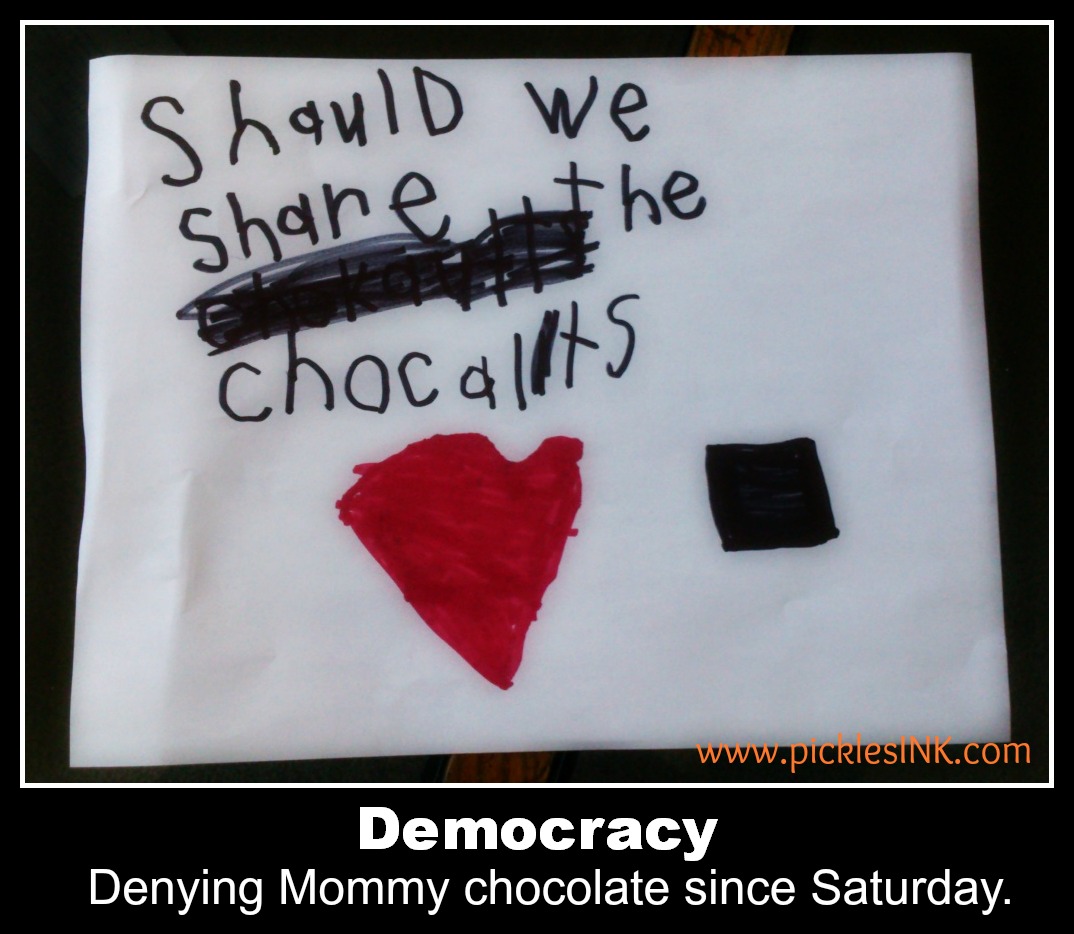
Minutes of Pickles Family Meeting Regarding Equitable Distribution of Chocolates

Family meeting sign with caption

Pickles Family Meeting Regarding Equitable Distribution of Chocolates

February 1, 2014

Present: Kid1, Kid2, Mommy, Daddy

Regrets: None

Kid1 called the meeting to order at 6:00 PM.

Kid1 explained that he had called a family meeting to address the issue of Mommy eating more than 11 After Eight chocolates.

Kid1 stated that he feels it is important that we share treats and one person doesn’t eat all of them.

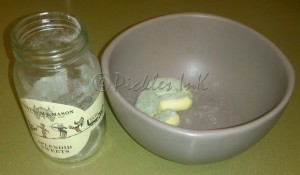
Mommy asked if this applies to Fortnam&Mason apple & custard hard candies as well because when Kid2 was told yesterday that she could only have her apple slices for snack, she sneaked into the cupboard and served herself a bowl of candies and ate them all.

Kid2 countered that she did not in fact eat them all because she could not fit the remainder in her mouth when Mommy came to take them away and that was mean.

Daddy giggled helplessly and unhelpfully.

Kid1 proposed that we require the sharing of chocolates equally and introduce a rule that chocolates only be eaten one at a time.

Mommy clarified that she had in fact eaten the chocolates one at a time, just in rapid succession.

Daddy asked if this directive would apply solely to chocolate or to other candies and/or treats.

Kid1 clarified that he intended the directive to include all candies and/or treats.

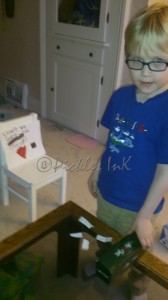
Kid1 proposed a vote by secret ballot and handed out ballots which, adding insult to injury, he then collected in the empty After Eight box.

Moved by Kid1 and seconded by Daddy that all candies and/or treats be shared in a fair and equitable manner and not consumed in disproportionate numbers by one person.                                                                                    Carried.

Mommy offered a formal apology: “I’m very sorry I ate so many.”

Kid2 offered no further comment regarding the hard candies.

Meeting adjourned at 6:20 PM.

candies

Unmistakable evidence of Kid2’s candy-eating transgression.

family meeting

Scrutineer tallying the results of the vote.

Not your mama’s toy shopping tips

‘Tis the season!! As the ground turns snowy and swathes of red and green appear in the dollar store, our thoughts turn to the joyous season of giving.

Christmas store

Dollar Store in October. No joke.

To help you with that giving, I have been carefully poring over toy catalogues to compile a list of my top 10 essential Christmas shopping tips. I really hope that you find them helpful!

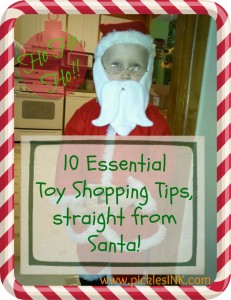
Ben santa

10 Essential Toy Shopping Tips, straight from Santa!

Top 10 Christmas Shopping Tips

(according to a national retail toy catalogue)

Tip #1:

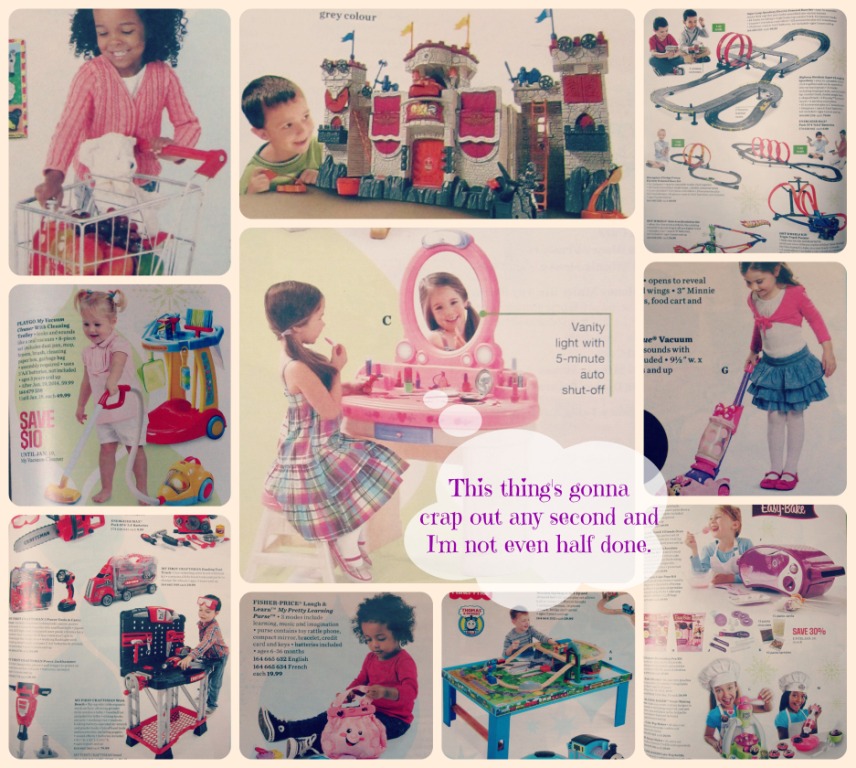
For the little boy in your life, pirate, castle, race car, tool kit and train play sets are always appropriate choices. Don’t accidentally buy one for your little girl, though. She would much rather have a pretty pink purse, baking set, realistic shopping cart, or vanity unit with light – the 5-minute auto shut-off means she won’t get into the habit of primping for too long, and her future husband will appreciate that, amiright? Pair that with her very own vacuum cleaner and cleaning trolley and look at her go!

Graphic for Number 1

Collage of catalogue pages. Thought bubble reads, “This thing’s gonna crap out any second and I’m not even half done.”

Tip #2:

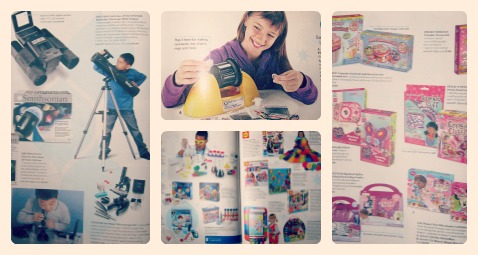
Boys love science, so look for a telescope, chemistry set, microscope, or any of many other assorted science kits with only boys on the boxes. As I’m sure you realize, girls aren’t really good at that sort of thing but they do like to make pretty stuff, so you could try the rock-tumbling kit; maybe she’ll even learn something while creating earrings, necklaces, or keychains! For even more creativity without the distracting science focus, consider any of a wide variety of craft kits.

Graphic for Number 2

Collage of catalogue pages

Tip#3:

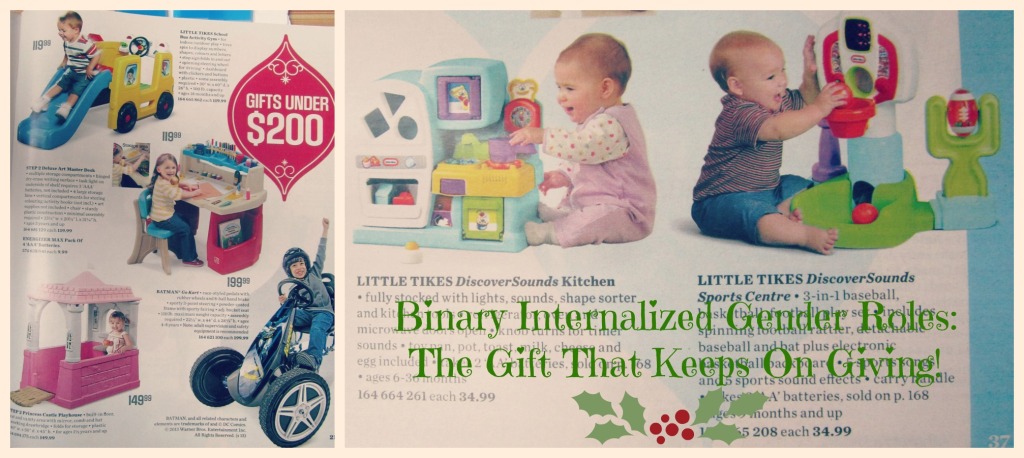
Looking for something a bit bigger? Little girls really like to sit and draw, or even just sit passively and look pretty, so consider a art desk or a pink princess castle playhouse for her. For her brother, how about an activity gym or superhero-themed real go-kart? Those boys really like to get active while their sisters watch! Remember, they’re never too young to start internalizing appropriate gender roles, so consider an infant-sized kitchen play-set for Baby Susie or sports centre for Little Johnny.

Graphic for Number 3

Collage of catalogue pages. Text reads, “Binary Internalized Gender Roles: The Gift That Keeps On Giving!”

Tip #4:

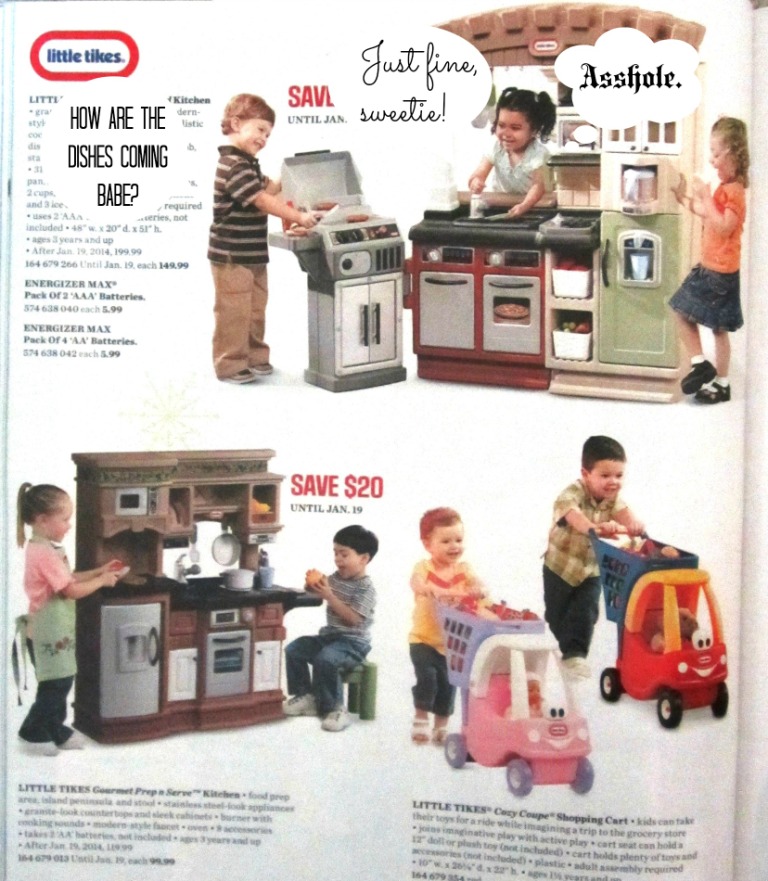
For toddlers and preschoolers, you can’t go wrong with a classic child-sized kitchen play set. It used to be that these were only for the little girl in your life, but we’ve come a long way, baby! Now you can get realistic-looking toy kitchens so that boys and girls can play together – think how much fun your kids will have reinforcing gender stereotypes when she washes dishes while he barbecues, or even better, as she fixes him another sammich while he scarfs down the first!

Graphic for Number 4

Catalogue page. Speech and thought bubbles read: “How are the dishes coming babe?” “Just fine, sweetie!” “Asshole.”

Tip #5:

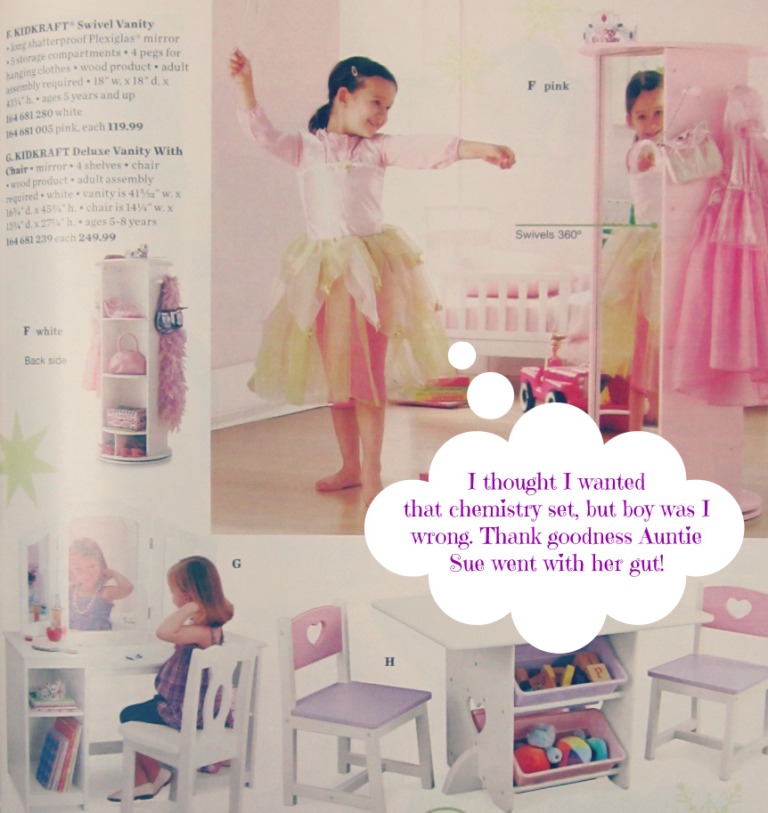
Little girls love to play dress-up and then look at themselves in the mirror, so the only question is: Table-top or full length? (Or how about both?)

Graphic for Number 5

Catalogue page. Thought bubble reads, “I thought I wanted that chemistry set, but boy was I wrong. Thank goodness Auntie Sue went with her gut!”

Tip #6:

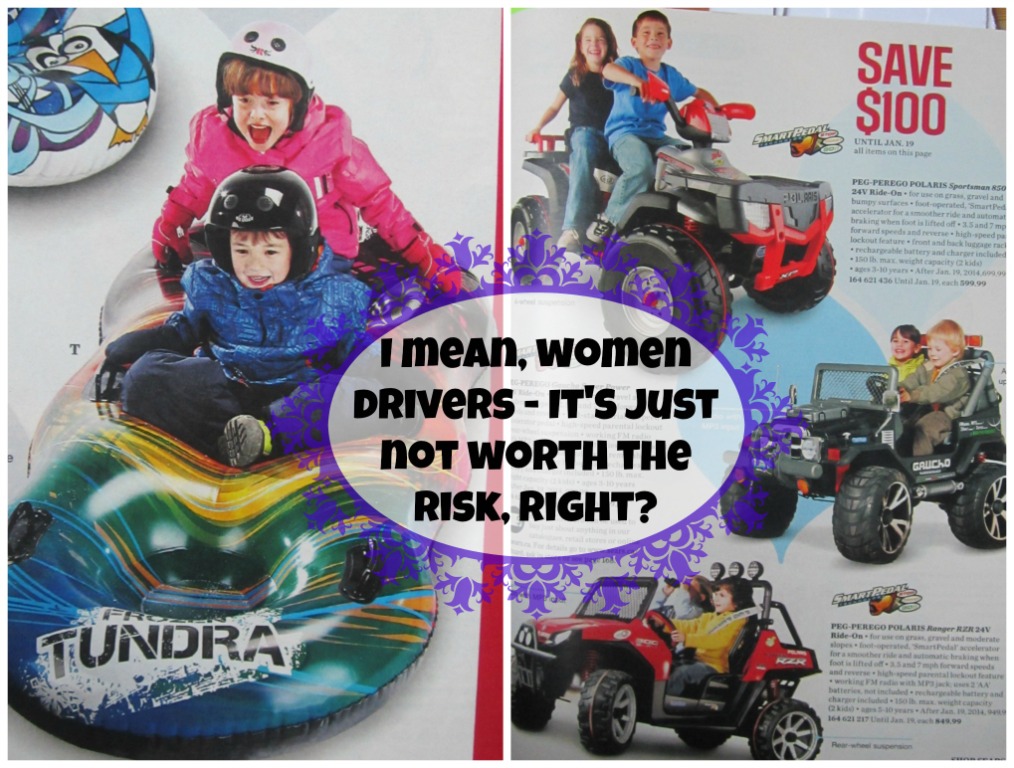
Outdoor toys like sleds, battery-operated cars and other ride-ons are always a hit! If you want your daughter to participate make sure she has a brother or little boy friend who can take the controls because you know what they say about women drivers…

Graphic for Number 6

Collage of catalogue pages. Text reads: “I mean, women drivers – It’s just not worth the risk, right?”

Tip #7:

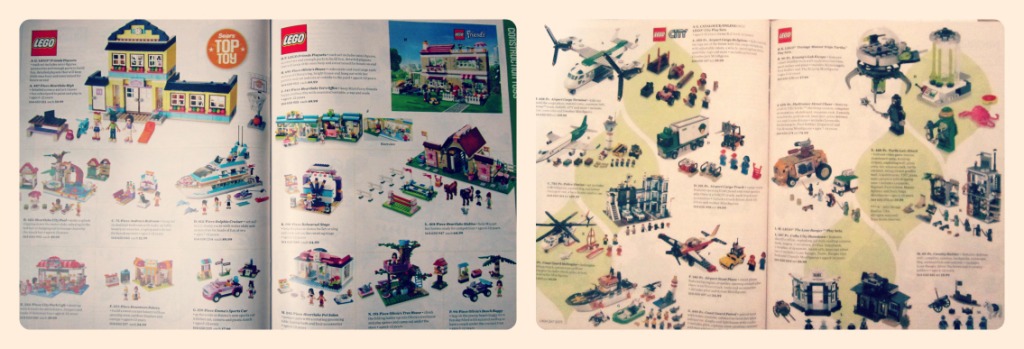
Building sets are also an excellent choice for both boys and girls. The manufacturer makes it easy for the consumer to ascertain which sets are appropriate for boys or girls by selectively gendering the character figures that are included. Your daughters will love building the sets and then grooming horses, pampering pets, hosting sleepovers, or running a bakery with Andrea, Emma, Stephanie, Mia, and Olivia, while your sons will enjoy flying planes, fighting bad guys, and performing open water rescues while identifying with male pilots, lumberjacks, forklift operators, police officers, superheroes, and coast guard members!

Graphic for Number 7

Collage of catalogue pages

Tip #8:

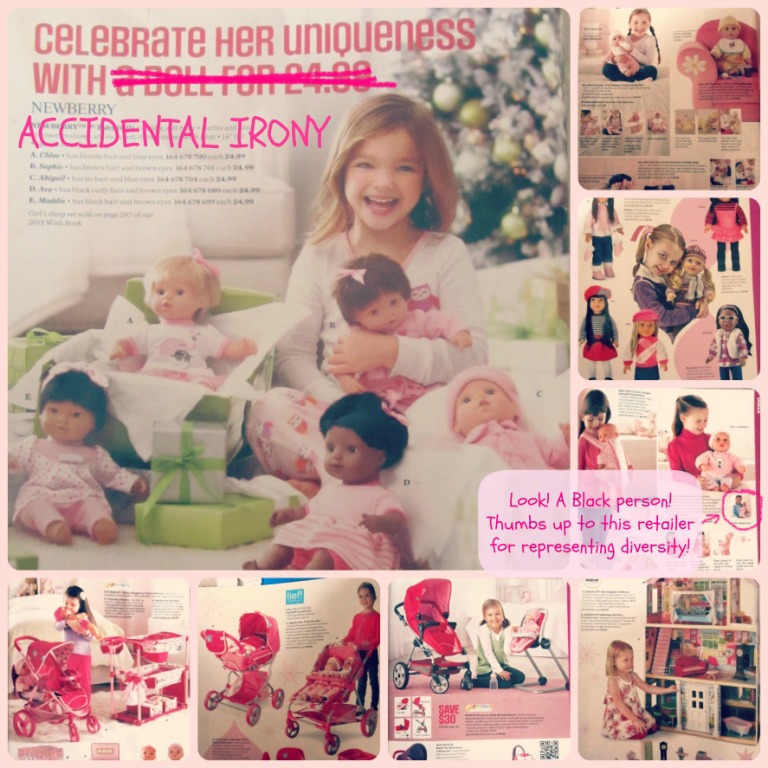
What little girl wouldn’t love a baby doll to cuddle and care for or a little girl doll to be her best friend? With a wide variety of doll furniture and other accessories available in a vast array of shades of pink, your little mommy can dress, change, bath, and feed her little baby to her heart’s content. Since statistics show that the vast majority of little girls are white or just slightly tanned, you will easily be able to find a doll that your daughter can relate to. As the catalogue suggests, “Celebrate her uniqueness” with the gift of unintentional irony! Playing with dolls develops nurturing, caring, and empathy, which is wonderful for girls, but of course we don’t wish to encourage those traits in boys, which brings us to our next tip –

Graphic for Number 8

Collage of catalogue pages – in fact, EVERY SINGLE page in the doll section. Text reads: “CELEBRATE HER UNIQUENESS WITH ACCIDENTAL IRONY” and (pointing to tiny inset photo) “Look! A Black person! Thumbs up to this retailer for representing diversity!”

Tip #9:

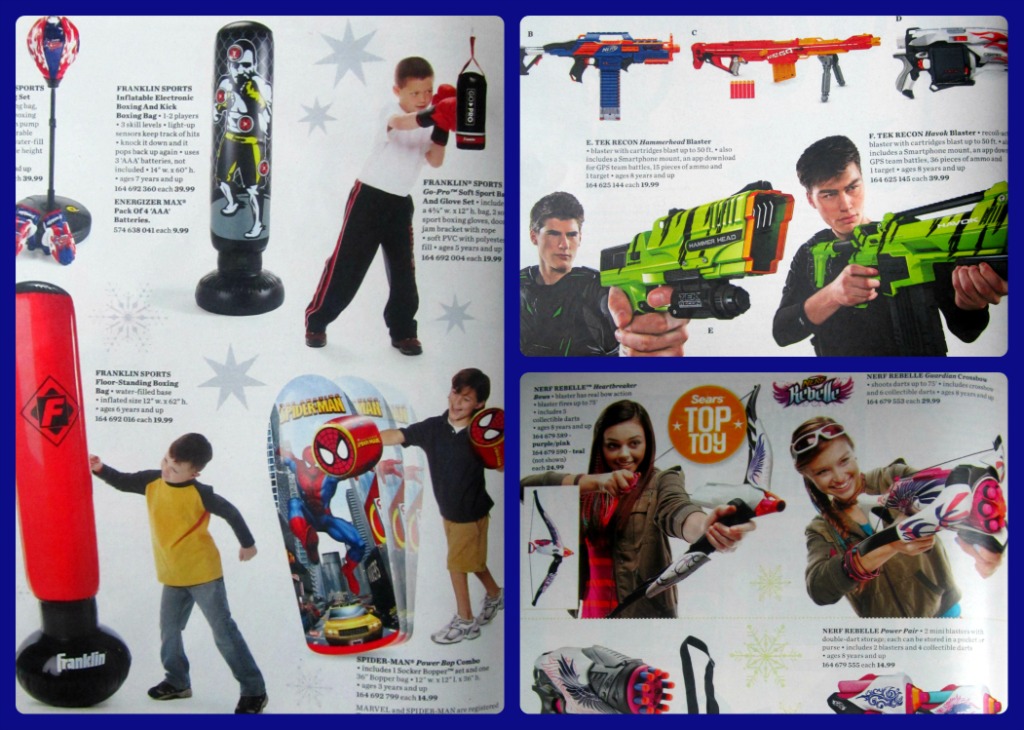
Boys love violence! Luckily there is a wide variety of toys available to feed those urges, including boxing sets, guns, and ammo. For your little Katniss, consider a pink/purple gun, bow, or crossbow – and so you don’t have to say it, the little “Rebelle” logo will remind her every time she sees it that it’s not quite socially appropriate, now, is it?

Graphic for Number 9

Collage of catalogue pages

Tip #10:

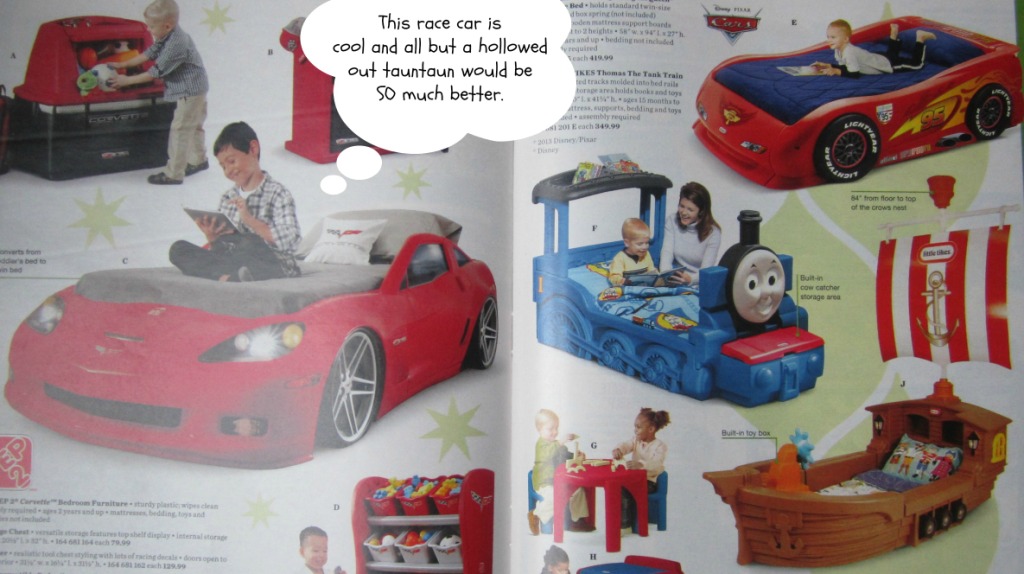
Finally, if toys aren’t really your game, consider furniture. Is your little one outgrowing his crib? Why not get him an awesome toddler bed that looks like a sports car, train, or pirate ship? If you have a daughter, you’ll have to think of something else since a hollowed out fairy princess would be kind of creepy. (Aside – How is it that no-one has made a disemboweled tauntaun toddler bed yet?? Mattel? Little Tikes? This is cross-branding GOLD. You guys will definitely want to get on that. I expect a 10% royalty on every unit sold.)

Graphic for Number 10

Catalogue pages. Thought bubble reads, “This race car is cool and all but a hollowed out tauntaun would be SO much better.”

Special bonus tip #11:

Be aware of the way that toy marketing influences as well as reinforces gender roles. Don’t buy into the marketing gimmick that tells you that you have to go to the separate “girls” section to get a pinkified version of the same familiar toys. Companies aren’t doing it because research has shown that there is a qualitative difference between “boy” stuff and “girl” stuff. They’re doing it because they know they can get you to spend your money twice on the same damn thing.

Listen to your children. Let them develop their own likes and dislikes – don’t let the toy companies do it for them. If your daughter asks Santa for a 44-piece tool kit while your son wants an Easy-Bake oven, congratulate yourself on doing parenting right. (I still use that tool kit – thanks again, Santa!).

The social construction of gender is a cyclical process – advertising doesn’t create those constructs, but it doesn’t try to undermine them either, because retailers make money by giving us what we want to see: Little white girls playing with dolls and boys driving racecars. They think that we won’t be as likely to buy it if they catch us off-guard with something that doesn’t seem quite right, so they (and we) continue to force our hockey-playing girls and our Strawberry Shortcake-loving boys back into those boxes that society has built for them over and over until eventually they decide that they might as well just stay there.

Let kids be kids, not gender constructs. The next time you see a toy catalogue with 9 pages of little (white) girls playing with doll stuff and not a boy in sight, take a cue from Kid1 and shout it out, loud and proud:

“That’s a STEREOTYPE!!”

Collage of photos of boys and girls being themselves

Collage of photos of boys and girls being themselves

Please Note: This is not a sponsored post. All artwork, unless otherwise noted, remains the property of the original photographer. My observations are based on my analysis of trends seen in toy catalogues and do not refer to any specific retailer or manufacturer pictured.

The Straight Poop on Potty Humour

I believe very strongly in teaching my kids to use appropriate behaviour and language at all times. There is no room in Team Pickles for potty humour and poop jokes, and if my children veer into bathroom humour territory, I gently admonish them and remind them that

What do you mean, no-one’s buying it? I’ll have you know that we don’t stand for that sort of…

All right, fine. Maybe I’m not as consistent as I perhaps should be on the whole potty humour thing…but y’know…sometimes…shtuff happens.

Straight Poop

The Straight Poop on Potty Humour
(Or, I think my credibility just went down the toilet)

Yesterday when Kid1 declared that he was about to have his third (3rd!!) poop of the day, I foolishly led us down the rabbit hole of poop jokes (my apologies, Kid1’s teachers!). It started out so innocently:

“Kid1, you’re the poopiest guy I’ve ever seen! I have never heard of anyone pooping as much as you! You’re like the pooper of all poopers. If you were a dinosaur, you’d be a Poopasaurus Rex!!”

*giggle giggle giggle *

“If you were a tropical fish, you’d be a pooping tetra!”

*giggle giggle giggle *

“If you were a lunch, you’d be…pooperoni and cheese!!”

*giggle giggle giggle *

“If you were a breakfast you’d be cereal with poopghurt!!”

*howls*

“If you were a dinner, you’d be spaghetti and poopballs!!”

“If I were a book, I’d be I Have To Go POOP!!”

“If you were a Dr. SEUSS book you’d be The Cat in the Hat Goes Poop! Or Horton Hears a Poop!”

“Yeah! And it would be by Dr. POOPS!”

“If you were a Treehouse show, you’d be Franklin and Poops!!

“Or Thomas the Tank Engine and Poops! And if I were a Disney Junior show, I’d be Stella and Poop!”

“If you were a song, you’d be I Knew You Were Poopy When You Walked In.

“If you were a breakfast cereal, you’d be Froot Poops!”

“If I was in a band I’d be a poopcussionist!!”

“If you were a musical instrument, you’d be a poop organ!!”

“Or I’d play the BAGPOOPS!!!”

“If you were a pizza topping, you’d be…”

POOPERONI AND CHEESE!!!”

*total collapse*

Sorry, mom…

~ karyn

How to Traumatize the Neighbourhood Kids in 2 Easy Steps

How to Traumatize the Neighbourhood Kids in 2 Easy Steps 

  1. Raise your kids to be philosophical about matters of life and death in the animal world.
  2. Let them invite friends over and watch the fun!
Traumatize neighbourhood

“Traumatize the Neighbourhood Kids in 2 Easy Steps!”

My childhood dream was to be a marine biologist, so I have always been interested in keeping tropical fish. Our last aquarium, a 25 gallon freshwater tank with an assortment of tropical fish, made it through our fire as well as 4 moves within 3 homes within 2 cities before settling in its (thus far) final placement in the front hall of our house.

While Kid1 was a toddler, all of the remaining fish passed away one at a time and were not replaced, leaving us with a working, filtering tank, but no livestock, and since I planned to eventually re-stock it, I kept it running…for…uh…five years.

Scene: Kid1 giving the “house tour” to any new guests to our home

Guest: “Wow, a fish tank! How many fish do you have?”

Kid1: “None. They all died.”

Guest: “Oh! That’s too bad…You must have been very sad.”

Kid1: “Not really. They died a long time ago.”

Guest: “Uh…”

Me (in my head): “I really should either empty that tank or get new fish before people start to think we’re weird…uh…er.”

Recently Kid1 became very interested in ichthyology and aquaria (Yay!!! I’m going to live out my childhood dream vicariously through my kid!! But…uh…no pressure, bud…) and begged me to finally nail down a timeline for restoring the tank to its former glory. Two weekends ago we cleaned it (ugh):

SONY DSC

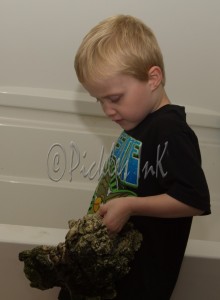
Kid1 cleaning the model coral reef

SONY DSC

Kid2 scrubbing the plastic plants

SONY DSC

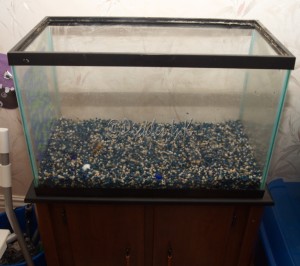
Empty (clean-ish) tank

SONY DSC

Filling the jug to pour into the tank. Funny story: When we went to move the tank for the first time, after the fire (listen, a lot of things happened in our first…uh…month…of marriage) I went to the grocery store to ask if I could pay the $10 deposit for some empty water cooler jugs. The girl refused, saying, “I can’t let you do that because you could bring them back and we wouldn’t know what you had put in them.” I said, “But I assume you don’t just fill them up with water again without sanitizing them first, so what does it matter?” She said, “But you could use them for something gross and then return them.” I said, “Like…uh…cleaning a fish tank? Well, yeah, I could, but I could also get a full one, empty it, and do that anyway.” She said, “I’m not selling you an empty jug.” I said, “Fine,” turned to the guy behind me in line carrying 2 empty jugs, and said, “If I give you the $20 you’d get from her for those, can I have them?” He said, “Sure,” and gave them to me and I smiled at her and walked out.

…and last Friday we got a school of neon tetras and an albino cory to start things off. Sadly, one of the tetras did not survive the weekend.

DSC_1753

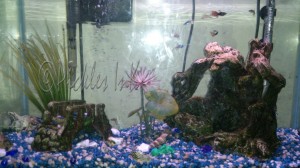
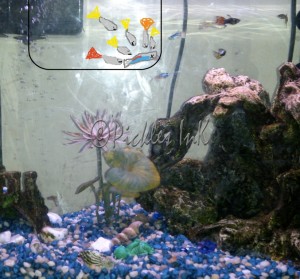
The tank in its current clean and stocked state.

Scene: Kid1 showing his friend the newly stocked tank

Friend: “How many are there?”

Kid1: “Five. There were six but one died. We have to take the body back to the store so they’ll give us a new one. It’s in the freezer.”

Me (in my head): “I’m glad he didn’t mention the part where I accidentally poured the other fish body down the drain.”

I seem to be having bad luck with tetras (or perhaps more accurately, the fish store seems to be having bad luck with them) because we went back to the store yesterday for a school of fan-tail guppies and a replacement neon who promptly up and died in the car on the way home.

Scene: Kid1 and his friend admiring the baggie of new fish acclimating to the tank

Friend: “Look at that little one!”

Kid1: “That’s the dead one.”

Friend: “I like those little ones.”

Kid1: “Those are neon tetras. They’re the same kind as the dead one.”

Me (in my head): “At least they haven’t noticed that the guppies are snacking on the corpse.”

Guppy cannibals

Artists rendition of the cannibalistic guppy feeding frenzy.

Fortunately for all involved they lost interest and went outside to ride bikes before they noticed the cannibalistic guppy feeding frenzy with the other neon standing (swimming? floating?) vigil for their fallen comrade. As my friend Jenn put it, “It’s like some sort of Sicilian mob-devised psychological torture.”

Between this and the fact that a friend posted on Facebook yesterday that she had dreamed about helping my mom and me defend the house from a zombie horde (successfully, so I’ve got that going for me…) I’m a little concerned about what Halloween night might bring.

Uh…Julia? The zombies weren’t by any chance scaly and blue and red striped, were they?

~ karyn

Apparently I’m issuing a linguistic challenge!

I’m banning the word “apparently.” Blanket Ban.

Think about it – any sentence that you need to start with the word “apparently” is probably not worth saying.  We use it to repeat things that we don’t know to be fact without having to cite our sources:

“Apparently it’s going to rain tomorrow.” “Oh, did you check the weather?” “Uh, no…I just overheard one of the other moms at school talking about it, so don’t blame me if you don’t sunscreen your kid and it turns out to be 30°C.”

“Apparently Rob Ford saved $1 billion for Toronto last year!” “No way – Really? That totally overshadows that whole crack thing!” “Yeah! Apparently that video was a hoax anyway – we all know videos can be altered! Apparently he’s never been under the influence of anything in his life. And apparently he in no way had the video buried. In fact, apparently the guy in the photo with the dead drug dealer wasn’t even him – It was his evil twin from an alternate dimension.“*

???????????????????????????????

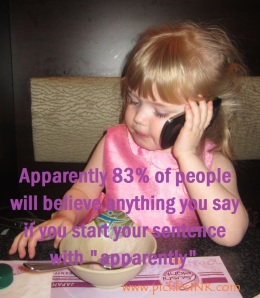
Kid2 chatting on Blackberry “Apparently 83% of people will believe anything you say if you start your sentence with ‘apparently'”

The trouble with “apparently” is twofold:

First, to quote The Princess Bride, “I do not think it means what you think it means.” “Apparently” actually means, “It is apparent that,” as in, “I can observe with my own senses that,” but we generally use it to mean, “I have read or heard that this is the case.”

Second, it lends an air of veracity to a subsequent statement that it does not necessarily deserve. In everyday speech, we frequently use “apparently” to mean “I don’t actually know firsthand if this is true, so don’t blame me if you later discover it to be false,” often with an undercurrent of, “And you probably wouldn’t be so quick to believe me if I told you where I had heard it.”

If you banish the word “apparently” from your vocabulary, you are forced precede your statement by actually stating your source:

“I vaguely remember hearing somewhere that…”

“I read on the Internet that…”

“Someone shared this picture on Facebook that said…”

“I got this chain email that said…”

“I read in the National Enquirer that besides Batboy being elected to the Vatican council…”

Try it for a day – banish “apparently” from your vocabulary and see how it changes what you do and don’t say.

Look at all the nonsense that would be done away with!

Pinterest hoaxes: Apparently if you mix hydrogen peroxide and Mountain Dew…” Have you tried it? NO! Then don’t spread it!

Facebook hoaxes: “Apparently there’s this new gang initiation thing where they leave baby carseats by the side of the road…” Did you Google it? What did Snopes say? *EEAANNNGHHH* Urban legend!!

Academic mumbo-jumbo: “My preliminary meta-analysis of my PhD research indicates…” <— Hey, when you put it that way, that one I’ll actually buy!

~ karyn

*NB – I made this joke BEFORE I came across the Daily Currant article. APPARENTLY great minds think alike

The Tao of Time-Out

The other morning I watched as a parent cornered one of Kid2’s teachers and asked, “So do you subscribe to that whole ‘time-out’ philosophy?” and she struggled to answer in a way that satisfied – not because one was wrong and the other was right, but because it often seems like when two people talk about “time-out” they might as well be speaking two completely different languages.

I don’t know when exactly “time-out” got such a bad rap, but I think a big part of the problem is that 99 percent of people who do “time-out” don’t do it right and 99 percent of people who don’t do it have only ever seen it done wrong. Most people who don’t believe in “that whole ‘time-out’ philosophy” have tried it out at some point – you know, the old,

“If you don’t stop that right now I’m putting you in time-out! DID YOU HEAR ME? That’s ONE! If I have to come over there, I’m going to…THAT’S TWO! I MEAN IT! DON’T MAKE ME GET TO THREE! I’m not kidding around! You are going in TIME-OUT, MISTER!! I TOLD YOU TO STOP! OKAY, THAT’S IT!! THREE!!! YOU GO AND SIT ON THAT TIME-OUT STEP RIGHT NOW!! You’re sitting there for five minutes because you didn’t…HEY, GET BACK ON THAT STEP! I TOLD YOU TO SIT DOWN! NOW THAT’S 10 MINUTES!! WHERE ARE YOU GOING? I THOUGHT I TOLD YOU TO SIT THERE!! NO TALKING!! DON’T MAKE FACES AT YOUR SISTER!! GET BACK ON THAT STEP RIGHT NOW! NOW YOU CAN SIT THERE FOR 10 MORE MINUTES!”

– and found that for some reason it didn’t work. We’ve all been there. The key to time-out is no different from any other discipline technique: Discipline techniques that work are those that are calm and consistent. Even spanking will be effective if it’s done within those parameters. I take issue philosophically with teaching children not to hit by hitting, but as long you consistently follow through, it will certainly change the behaviour that you want it to change.

???????????????????????????????

“THERE’S NO SMILING IN TIME-OUT, CHARLEY!!”
©PicklesINK 2013

1-2-3 Magic devotes an entire chapter to the false notion or “wish” (which I think is a really interesting way of looking at it) that is behind why most discipline attempts that don’t work: The Little Adult Assumption.

The Little Adult Assumption is the belief that kids have hearts of gold and that they are basically reasonable and unselfish. they’re just smaller versions of grownups, in other words. and because they are little adults, this notion goes, whenever the youngsters are misbehaving or not cooperating, the problem must be that they don’t have enough information at their disposal to be able to do the right thing.

Imagine, for example, that your eight-year-old son is torturing his little sister for the fifteenth time since they got home from school. What should you do? If your boy is a little adult, you simply sit him down, calmly look him in the eye, and explain to him the three golden reasons why he shouldn’t  tease his sister. First of all, teasing hurts her. Second, it makes you mad at him. Third — and most important — how would he feel if someone treated him like that?

Your son looks you in the eye, his face brightening with insight, and he says, “Gee, I never looked at it like that before!” Then he stops bothering his sister for the rest of his life. (1-2-3 Magic, pp. 15-16)

Even well into adolescence and young adulthood, our brains are still developing and changing. Children are simply not capable of understanding or thinking rationally at the same level as adults. Part of our job as parents is give your children a safe space in which to express their feelings and opinions, but another very important part of our job is to teach our children how to act appropriately  – “I understand that you are very angry, but it is not okay to throw your toys, and there are consequences to that choice.”

The parent talking to Kid2’s teacher said, “We do a lot of getting down to their level and talking to them.” 1-2-3 Magic explains that while one explanation can be appropriate – it could be that your child really did not have the necessary information to act appropriate – it’s attempts at repeated explanations that can lead to trouble, adding, interestingly, “too much parent talking irritates and distracts children” (p. 17). I can certainly see that – if I’m already feeling overwhelmed by a situation and consequently acting out, the last thing I need is for someone to get right in my face and talk at me! The teacher replied, “We use a lot of redirection, but then if we have to we remove the child from the situation.” Well, ladies and gentleman, in accepting this explanation that parent may not have realized it, but what that teacher described was…drum-roll please…a time-out!

I absolutely subscribe to “that whole ‘time-out’ philosophy.” It is one of the most important discipline tools I have as a parent. In a recent blog post, Alyson Schafer noted that the word “discipline” is derived from “disciple,” meaning to teach or guide. I see time-out as a tool for teaching as well as an important skill for my children to learn, and in fact part of that involves them seeing ME taking a time-out when I need to.

As I mentioned before, the two keys to effective discipline are consistency and calmness: Firstly, in order for any discipline technique to effect a change in behaviour, it must be consistent. This means that if you say, “If you don’t do/stop doing X, I am going to Y,” and the child doesn’t do/stop doing X, you HAVE TO do Y. If you don’t do Y EVERY SINGLE TIME, your child will actually not do/not stop doing X even MORE OFTEN than if you never did Y at all. In operant conditioning, this is called a variable-ratio reinforcement schedule. In fairness to anti-time-out parent, as long as he/she is consistently “getting down to his level and talking” EVERY SINGLE TIME it will also eventually work to change the child’s behaviour – the only danger is that if the child interprets this as positive attention, it is possible that the change may not be the one the parent intends.

Second, in order for any discipline technique to work the way you want it to, it must be calm. 1-2-3 Magic calls the use of too much (negative) emotion in trying to discipline a “parental temper tantrum.” When you let your emotions get the better of you while trying to discipline, several things happen: a. You show your child that he or she has the power to cause you to lose control; b. You upset and frighten your child; and c. You probably aren’t applying your chosen discipline technique consistently.

It’s the combination of parental loss of emotional control (temper tantrum) and lack of consistency that derails most attempts at “that whole time-out philosophy.” Remember that whole, “I’m telling you, IF I GET TO THREE YOU ARE GETTING A TIME-OUT, MISTER!!”?

My goal in using time-outs is to teach my children that there are times in life when you become overwhelmed by a situation or by your surroundings, and a way to deal with that instead of “having a freak-out” is to briefly step away from the situation, calm yourself down and gather your thoughts, and then return. At this age, most of time I have to tell them when that time has come – “Monkey, there is no yelling and throwing. You are going to sit out on the stair for 3 minutes because you yelled and threw your toys,” or “Bud, you need to calm down. You can go and take a time out in your room and look at books until you’re ready to stop yelling and whining,” – but my hope is that they start to recognize these times for themselves.

Just think how much simpler life would be if it were socially acceptable for us adults to say, “Could you excuse me? I’m going to take a moment to gather my thoughts.”

~ karyn